
How Much Protein Per Day: Your Needs for Muscle Building
Working out how much protein per day you need starts with your body weight and training goals. A useful plan translates a daily gram target into meals you enjoy and can prepare regularly. Start with an estimate, compare it with your usual intake, and adjust portions where needed.
Before changing your diet, note which meals already include a protein source and which leave a gap. This makes your next step specific: adjust breakfast, increase a lunch portion, or prepare a convenient snack.
How much protein per day to build muscle should you aim for?
Aim for approximately 1.4-2.0 grams of protein per kilogram of body weight daily when resistance training regularly. Starting near 1.6 grams per kilogram gives most healthy lifters a manageable target. Your calorie intake, training demands, and food preferences help determine where you settle within that range.
For someone weighing 75 kilograms, that range equals 105-150 grams daily, with 120 grams as the starting target. These figures describe total protein from food and supplements combined. You do not need to add a shake on top of an already adequate intake.
When deciding how much protein per day to build muscle fits your routine, choose a target you can sustain. Plan around your budget, cooking time, and appetite so the calculation becomes a workable eating routine.
How do you calculate protein per day by body weight?
Calculate your daily target by multiplying your weight in kilograms by your chosen protein amount in grams per kilogram. To convert pounds into kilograms, divide by approximately 2.2. For example, a person weighing 154 pounds weighs about 70 kilograms and would target 112 grams at 1.6 grams per kilogram.
Use the following examples to estimate protein per day by body weight at that starting level:
| Body weight | Daily protein at 1.6 g/kg |
|---|---|
| 50 kg / 110 lb | 80 g |
| 60 kg / 132 lb | 96 g |
| 70 kg / 154 lb | 112 g |
| 80 kg / 176 lb | 128 g |
| 90 kg / 198 lb | 144 g |
Treat these numbers as planning estimates. Rounding 112 grams to roughly 110 grams makes meal planning easier without meaningfully changing the goal. If your body weight includes substantial excess body fat, a calculation using current weight may overestimate your needs; individualized guidance can help.
Does protein per day for women differ from men?
Women who lift weights can generally use the same protein range per kilogram as men: approximately 1.4-2.0 grams daily. A smaller body size often means a lower total gram target, rather than a different calculation. Training goals and overall calorie intake matter more than using separate male and female rules.
For example, a 60-kilogram woman starting at 1.6 grams per kilogram would aim for about 96 grams daily. Discussions of protein per day for women should distinguish ordinary training needs from pregnancy, breastfeeding, or medical circumstances, which can require individualized nutrition advice.
How should you spread protein across meals?
Spread your daily protein across three or four meals that each contain a meaningful protein source. For a 120-gram target, four meals providing roughly 30 grams each offer a straightforward approach. Even distribution can support muscle protein synthesis, although meeting your overall daily target remains the main practical priority.
Build breakfast around yogurt, eggs, tofu, or another protein source instead of leaving most of your intake until dinner. Lunch and dinner might feature fish, poultry, beans, lentils, or tempeh. Portions and protein content vary, so check labels when planning meals rather than assuming every serving provides the same amount.
When using packaged foods, check whether the label describes one serving or the whole container. Record the amount you actually eat when estimating your meal total.
Do you need protein powder to reach your target?
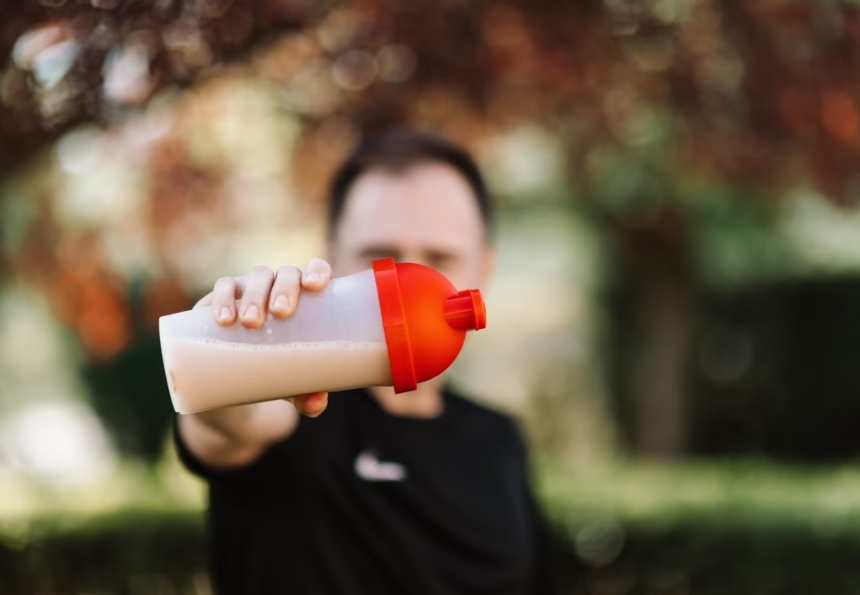
Protein powder is optional; ordinary foods can supply enough protein for muscle building. A shake can help when your appetite, schedule, or food access makes your target difficult to reach. Count its protein toward your daily total, and choose it for convenience rather than expecting special muscle growth benefits.
If you use powder, choose a serving that fits the gap in your meals. Include the milk or other ingredients in your estimate, and consider whether the finished shake suits your appetite and preferences.
Frequently Asked Questions
Should you calculate protein per day by body weight again after gaining weight?
Recalculate after a meaningful, sustained change in body weight rather than reacting to daily scale fluctuations. At 1.6 grams per kilogram, gaining five kilograms changes the estimate by eight grams daily. Review your usual weight trend and adjust meal portions if your existing intake no longer covers the updated target.
Does protein per day for women need to change on rest days?
Women generally do not need to reduce protein on rest days because muscle recovery continues between workouts. Keeping a similar daily target also makes meal planning simpler. Adjusting total calories may suit changes in activity, but skipping training for a day does not remove the need for dietary protein.
Will eating more protein build muscle without lifting weights?
Eating more protein alone does not reproduce the muscle building stimulus of resistance training. Protein supplies the raw materials, while progressively challenging exercise signals muscles to adapt. If your intake already meets your needs, adding more is unlikely to compensate for a training program that lacks sufficient challenge or consistency.
To decide how much protein per day belongs in your routine, use your target as a practical guide. Keep enough variety in your meals to make the plan enjoyable, and review how well it fits your routine over time.