
Dumbbell workout for beginners: Common questions answered
A full body dumbbell workout gives beginners a straightforward way to practice strength training with a few pieces of equipment. Start with manageable weights, simple movements, and enough rest to keep repetitions controlled. This guide explains how to choose exercises, arrange sessions, prepare your space, and decide when to progress.
What should a dumbbell workout for beginners include?
A beginner routine should include a squat, a hip hinge, a push, and a pull. These movement patterns let you train your legs and upper body within one session. Choose simple variations that you can repeat with control, and learn each exercise before adding more weight.
Practice sitting down onto a chair before holding a weight for squats. For a hip hinge, rehearse moving your hips backward without weights before trying the Romanian deadlift. Learning the movement and handling dumbbells can happen in separate steps; you do not need to master both immediately.
Before your working sets, rehearse the exercises with no weight or a lighter load. Use these practice repetitions to check your stance, grip, and available space. If a movement feels unfamiliar, simplify it rather than trying to match someone else’s depth or speed.
How do you organize a full body dumbbell workout?
Organize your session by placing your main leg and upper-body exercises before optional extras. Complete the planned sets of one exercise before moving to the next. This approach makes it easier to track repetitions, adjust weights, and rest without rushing between unfamiliar movements or repeatedly changing your setup.
Use the following sequence as a starting template. Begin with one set per exercise if everything is new. Consider adding a second set when you can finish the session comfortably with consistent technique. Rest about one to two minutes between sets, taking longer when needed to regain your breathing and concentration.
- Goblet squat: Hold one dumbbell near your chest and perform 8-10 controlled repetitions. Use a stance that lets you stay balanced throughout the movement.
- Dumbbell Romanian deadlift: Keep the weights close to your legs and perform 8-10 repetitions, pushing your hips backward. Keep the movement controlled rather than reaching toward the floor.
- Dumbbell floor press: Lie on the floor with bent knees and perform 8-10 repetitions. Set the weights down carefully when you finish.
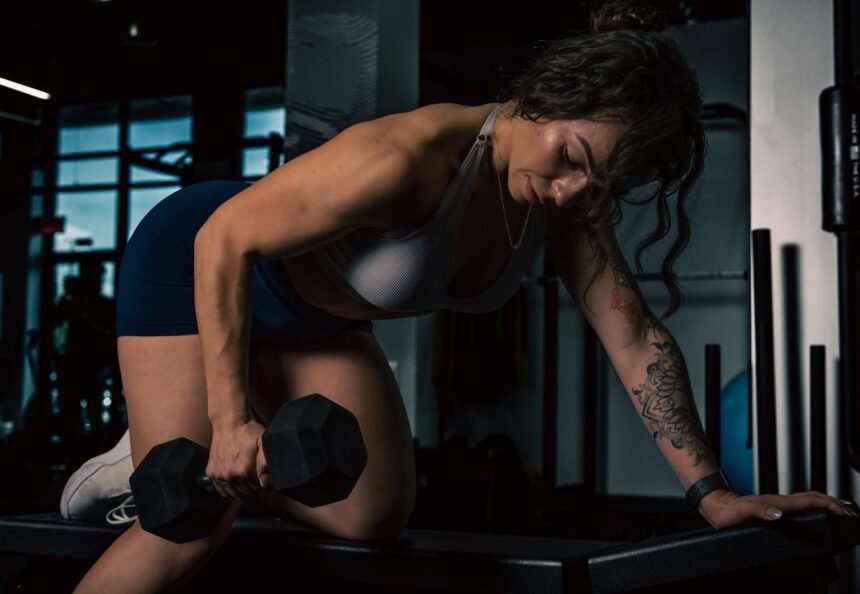
- Supported one-arm row: Brace your free hand on a stable surface and perform 8-10 repetitions per side. Arrange your support before picking up the weight.
- Suitcase hold: Stand upright holding one dumbbell beside you for 15-20 seconds, then switch sides. Choose a load you can hold without leaning.
What equipment do you need for a dumbbell workout at home?
A dumbbell workout at home requires suitable dumbbells, clear floor space, and secure footing. Adjustable weights offer flexibility, but fixed dumbbells can also work. For supported exercises, use a solid surface that cannot slide or tip. A bench is optional because pressing exercises can be performed on the floor.
Check adjustable dumbbell fasteners before lifting, and leave enough room to lower the weights safely. Keep unused equipment outside your exercise area. Arrange the space for both standing and floor exercises before starting so you can concentrate on each movement without repeatedly moving furniture or stepping around obstacles.
How heavy should your first dumbbells be?
Your first dumbbells should let you complete the planned repetitions with steady technique while feeling that a few more repetitions would still be possible. There is no single starting weight for everyone. Test a light load first, and choose weights separately for different exercises rather than forcing one pair to fit everything.
A row may suit a different load from a press during the same session. Judge each exercise by how you move: if you need to swing the weight or rush repetitions, reduce the load. The number printed on the dumbbell is a reference for tracking, not a target to chase.
How often should beginners train?
Two strength sessions per week, separated by a rest day, provide a practical starting schedule for beginners. Repeat a manageable routine so you can practice the exercises regularly. Adjust the schedule if fatigue interferes with your next session, and avoid adding training days simply because your first workout felt easy.
For example, train on Monday and Thursday. Choose days that fit your commitments, and allow enough time to complete the session without rushing. Keep the exercise order familiar while learning; changing everything each session makes it harder to compare your performance and identify what needs practice.
Frequently Asked Questions
What should you record after each session?
Record the exercises, weights, sets, and repetitions you completed after each session. For holds, note the duration on each side instead of repetitions. Add a short comment about any setup changes or difficulty controlling the movement. These details give you a useful reference when planning your next session.
When should you increase the weight?
Increase the weight when you repeatedly complete all planned sets at the upper end of your repetition range with consistent technique and repetitions still available. Use the smallest practical increase. Expect to perform fewer repetitions initially, and return to the previous load if the heavier weight disrupts your movement.
Should every set end in muscle failure?
Beginners do not need to take every set to muscle failure. Leave a few controlled repetitions available, especially when learning an unfamiliar exercise. This keeps the focus on practicing the movement without making the final repetition a struggle. Completing your planned repetitions does not require exhausting every possible repetition.