
Tricep Workout: Common Training Questions Answered
A useful tricep workout combines controlled elbow extensions, manageable resistance, and a clear way to progress. The triceps straighten your elbows and contribute to pushing movements. Direct training lets you practise that action without relying entirely on chest or shoulder exercises. Start with a small selection of movements, record your sets, and increase the challenge when your technique stays consistent.
Your routine should fit your equipment and existing training. A repeatable session gives you a clearer basis for adjustments than constantly changing exercises or adding a demanding finisher.
What are the best tricep exercises for a simple routine?
The best tricep exercises for a simple routine are movements you can load progressively while keeping your upper arms reasonably stable. A cable pressdown and an overhead extension provide two useful options. A close-grip push-up adds a pressing movement, although your chest and shoulders also contribute to each repetition.
Begin with one extension variation you can perform consistently. Add a second movement when it serves a clear purpose, such as training with a different arm position. You do not need every available exercise in one session. Keep your choices steady long enough to judge whether your repetitions and control are improving.
How do you structure a tricep workout with dumbbells?
Structure a tricep workout with dumbbells around one overhead extension and, if needed, one lying extension. As a conservative starting example, perform two sets of each for eight to fifteen controlled repetitions. Choose weights that let you finish each set with roughly two more clean repetitions still possible.
For lying extensions, use a bench or the floor and control the weights throughout the movement instead of letting them drop toward your head. Set yourself up before lifting, with enough room to move the dumbbells without striking surrounding objects. Choose a comfortable range you can repeat.
These set and repetition numbers are an example, not a requirement. If your current programme already includes substantial pressing, begin with less direct arm work. A short session can still provide something useful to record and adjust; its length alone does not tell you whether to add exercises.
What does a tricep workout at home require?
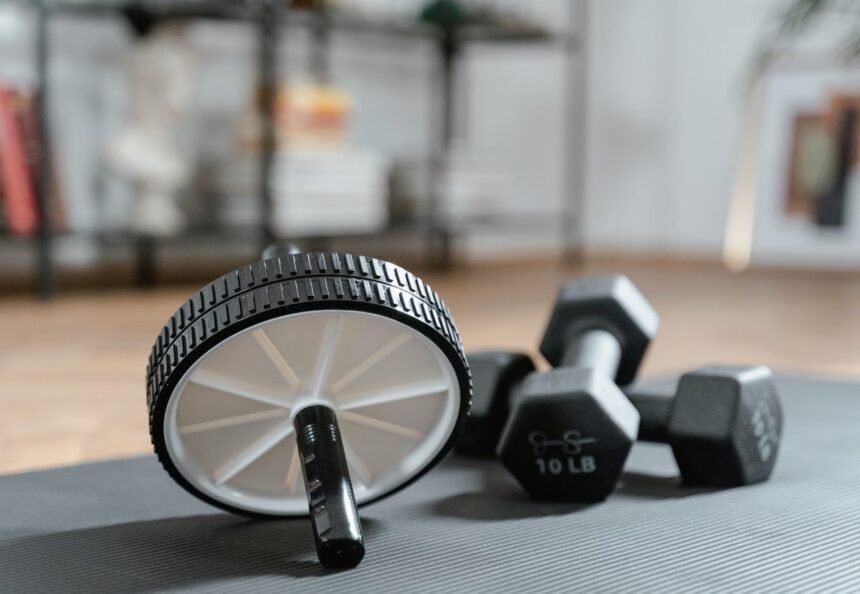
A tricep workout at home requires resistance you can control and a stable space to exercise. Close-grip push-ups can provide a starting point without weights. Make them easier by placing your hands on a secure, elevated surface. Dumbbells or a properly anchored resistance band offer additional elbow-extension options.
Avoid supports that slide, tip, or shift under pressure. Choose your exercise around the space you actually have, including room for your arms and equipment throughout each repetition. With push-ups, select an elevation that lets you keep your body position steady as you bend and straighten your elbows.
How often should you train your triceps?
Two weekly sessions are a practical starting schedule for direct triceps training, with recovery time between them. Count your pressing sessions when planning those days because presses also involve the triceps. Adjust frequency and sets according to whether your performance recovers, rather than adding sessions automatically each week.
Look at the whole week before choosing where to place these sessions. If you repeatedly struggle to match your usual performance, review your total pressing and extension work. Keep scheduling changes simple so you can observe their effect. A calendar organises the plan; consistent performance helps you judge how well it fits.
How close to failure should each set go?
Most sets can end when you estimate that one to three additional controlled repetitions remain. This keeps the work challenging without requiring every set to reach failure. Stop earlier if your movement changes substantially, your torso starts swinging, or you cannot control the lowering portion of the repetition.
Keep the setup and range consistent when comparing efforts. Twelve controlled repetitions followed next week by thirteen similar repetitions show a clearer change than extra repetitions achieved by shortening the movement. Treat your estimate of remaining repetitions as a practical guide, and avoid forcing a target after control deteriorates.
A simple way to track progress
Record the exercise, resistance, sets, and repetitions. Note relevant changes, such as bench position or completing presses beforehand. With the eight-to-fifteen repetition example, keep the same weight until you reach fifteen controlled repetitions in every planned set. Then try the smallest available weight increase and work upward again within the range.
If a heavier option is unavailable, first review your control and comfortable range before adding sets. Change one part of the plan at a time so the log remains useful.
Frequently Asked Questions
Can beginners use the same movements as experienced lifters?
Beginners can use many of the same movements as experienced lifters, including pressdowns and extensions, provided the resistance and setup match their ability. Experience changes how much work someone can manage; it does not create a separate mandatory exercise list. Start light enough to learn a consistent elbow path.
Should you compare loads across different exercise variations?
Compare loads within the same exercise variation rather than treating different movements as equivalent. Cable, band, and dumbbell exercises feel different because resistance and body position differ. Record each variation separately, including its setup, so a change of equipment does not create a misleading impression of progress or lost strength.
What should you check before using a resistance band?
Check that your resistance band is properly anchored and that you have enough space to perform the movement steadily. Establish your position before beginning the set, then choose resistance you can control throughout each repetition. If the anchor shifts or your position becomes unstable, stop and adjust the setup.