
How to Build Bigger Arms: Exercises and Training Tips
Learning how to build bigger arms starts with training your biceps and triceps, recording your progress, and allowing time to recover between demanding workouts. Choose movements you can perform consistently, then gradually increase the challenge as your performance improves. This guide covers exercise selection, a manageable weekly routine, and home training options. It also addresses a common concern: how long does it take to build bigger arms? Your starting point and consistency influence the answer.
What are the best exercises for bigger arms?
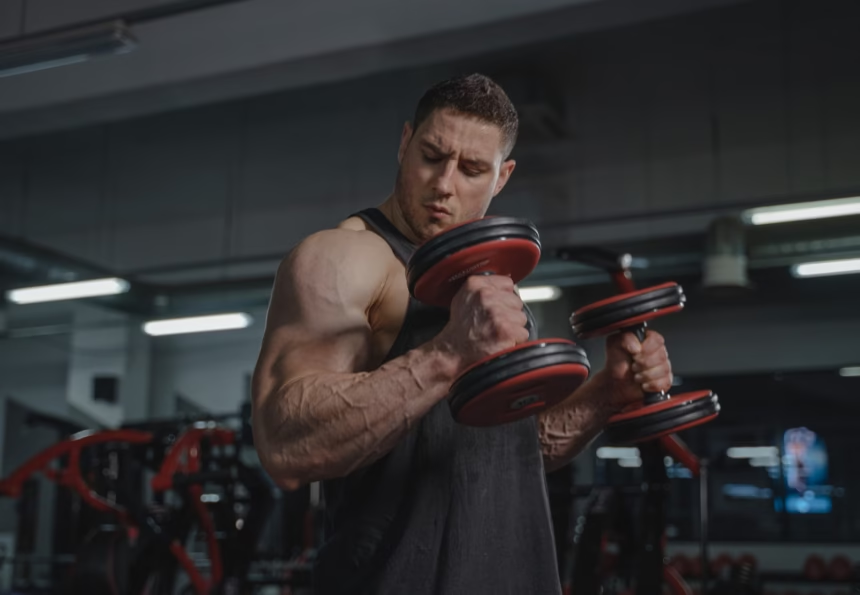
Dumbbell curls, hammer curls, cable pressdowns, and overhead triceps extensions are practical choices for building arm muscle. Curls train the muscles that bend your elbows, while pressdowns and extensions train your triceps. Choose movements that allow controlled repetitions through a comfortable range without swinging your torso or forcing your joints.
The best exercises for bigger arms suit your equipment and let you track improvement reliably. Keep a small selection long enough to learn each movement. Changing exercises every workout makes comparisons difficult, especially when different handles, grips, or body positions change how much resistance you can control.
- Dumbbell curl: Keep your upper arms relatively still and lower the weights under control.
- Hammer curl: Keep your palms facing inward and avoid swinging to start each repetition.
- Cable pressdown: Extend your elbows without rocking your body over the handle.
- Overhead triceps extension: Choose a comfortable shoulder position without forcing extra depth.
How often should you train your arms?
Two direct arm sessions per week provide a practical starting schedule, particularly when separated by at least a day without direct arm work. Split your exercises between those sessions rather than placing everything into one workout. Adjust the amount according to your other lifting, recovery, and ability to maintain technique.
The example below assumes your program already includes some pulling and pressing exercises. These are working sets; add warm-up sets when needed. Treat the repetition ranges as starting suggestions. Keep the exercise order consistent so your records reflect comparable workouts rather than changing levels of fatigue.
| Session | Exercise | Working sets | Repetitions |
|---|---|---|---|
| A | Dumbbell curl | 2 | 8-12 |
| A | Cable pressdown | 2 | 10-15 |
| B | Hammer curl | 2 | 10-15 |
| B | Overhead triceps extension | 2 | 10-15 |
For warm-ups, rehearse the planned movement with lighter resistance before beginning your working sets. Use these repetitions to check your grip, stance, and available range of motion. Between working sets, allow enough rest to approach the next set with steady breathing and a secure grip. Note unusually short breaks in your log, since rushing can make a familiar weight feel harder and complicate comparisons with previous sessions.
How should you increase the challenge over time?
Increase repetitions within a chosen range before increasing weight. For example, work from eight toward twelve controlled repetitions with the same dumbbells. When you reach the upper target on every planned set with comparable technique and effort, try the smallest available weight increase and rebuild your repetitions from there.
If the heavier weight prevents you from reaching the lower target with control, return to the previous load. An increase is useful only when you can manage it. Record the exercise, resistance, sets, and repetitions after each session. Include brief technique notes when necessary, and let actual performance guide adjustments instead of adding weight simply because another week has passed.
How to build bigger arms at home?
You can train your arms at home with adjustable dumbbells or resistance bands, using curls for your biceps and extensions for your triceps. Select resistance that makes the final repetitions challenging while preserving control. With bands, inspect the material and use an anchor designed to withstand the intended pulling direction.
When planning how to build bigger arms at home, make your setup repeatable. Record the dumbbell weight or band used, your position, and your distance from the anchor. Changing these details can change the challenge. Keep enough clear space to move comfortably and check your equipment before starting each session.
What supports recovery between arm workouts?
Adequate sleep, regular meals containing protein, and sufficient overall food intake support recovery and muscle development. Leave room between demanding sessions to assess whether your performance has recovered. Persistent soreness, worsening technique, or repeatedly falling repetitions are reasons to review your workload before adding more exercises or sets.
Consider your whole training week when making that review. Pulling and pressing exercises also involve your arms, so direct work adds to an existing workload. Muscle soreness alone does not show whether a workout was effective. Use your training record to assess performance over time.
Frequently Asked Questions
How long does it take to build bigger arms?
Visible arm growth generally takes months of consistent training, although the timing varies with training experience, nutrition, starting muscle size, and adherence. Early improvements in repetitions or lifting technique do not necessarily indicate visible muscle gain. Keep expectations flexible because a fixed deadline cannot account for differences between individual trainees.
Do you need to train arms to failure?
You do not need to reach muscular failure on every set to build your arms. Finish most sets when you estimate that one or two controlled repetitions remain; beginners may need practice judging this. Stop when technique changes noticeably, since swinging through extra repetitions makes progress harder to interpret and fatigue harder to manage.
How should you measure arm growth?
Measure your upper arm at the same location, in the same position, and under similar conditions each time. Use consistent tape tension and avoid comparing a postworkout measurement with a rested one. Record whether your arm is relaxed or flexed, and assess trends across several weeks rather than daily fluctuations.