
Muscle Building Without a Gym Membership Tips and FAQs
These muscle building without a gym membership tips focus on choosing challenging exercises, recording progress, and making room for recovery. If you are asking, “how long does muscle building without a gym membership take to show results?”, it helps to distinguish improvements in exercise performance from visible changes. Start with equipment you can use safely and a routine that fits your ordinary week.
What makes home resistance training effective?
Training outside a gym can build muscle when exercises provide sufficient resistance and sets require meaningful effort. Your muscles respond to the demands placed on them, whether resistance comes from bodyweight, bands, or weights. Progress depends on gradually increasing those demands while maintaining controlled technique and recovering between workouts.
Keep a simple workout log with the exercise, resistance, repetitions, and sets. Moving from eight controlled push-ups to twelve under comparable conditions shows improved performance. Record changes in technique or exercise variation too, so an easier version does not appear to be progress simply because you completed more repetitions.
What equipment do you need to build muscle at home?
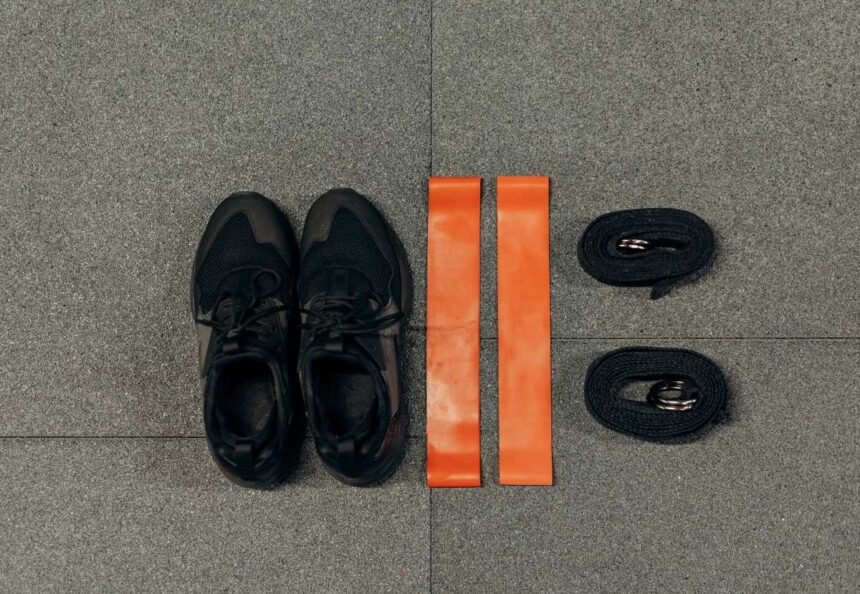
You can start with bodyweight exercises, but equipment expands your options, especially for pulling movements and lower-body loading. Resistance bands or adjustable dumbbells provide practical ways to increase difficulty. A stable exercise surface and enough clear space matter more than buying several accessories before you establish a consistent routine.
Choose purchases around movements your setup cannot currently accommodate. Push-ups provide a pressing movement; rows need suitable resistance and, for some variations, a secure anchor. Follow equipment instructions, inspect bands for damage, and avoid improvised hanging arrangements or furniture that could move under your weight.
How do you apply progressive overload with limited weights?
Apply progressive overload by increasing repetitions, resistance, range of motion, or exercise difficulty over time. With limited weights, a harder variation can make an exercise challenging again. Change one variable at a time so you can judge progress, and keep your movement standards consistent when comparing one workout with another.
Choose a repetition range and add repetitions gradually. When all sets reach its upper end with controlled technique, increase resistance if possible. Otherwise, consider a more demanding variation you can perform securely. Record the change as a new variation rather than comparing its repetitions directly with the previous exercise.
How many sets and repetitions should beginners perform?
A manageable starting point is two working sets per exercise, using a repetition range that makes the final repetitions challenging while technique remains controlled. There is no single repetition count that guarantees growth. Adjust resistance or exercise difficulty so the set requires effort without forcing you to shorten or distort the movement.
Build sessions around familiar movements that cover pressing, pulling, and lower-body work. For example, combine an appropriate push-up variation, a supported dumbbell row, and a squat variation. Select versions that suit your ability and equipment, and allow enough rest between sets to repeat the movement with control.
Add sets only when you can manage your current workload and recover between sessions. If performance repeatedly declines, review the difficulty and amount of work before adding more. A written plan makes these adjustments easier because you can see what changed instead of relying on memory.
Which habits help you stay consistent?
Preparing your training space and reserving reliable workout times can make consistency easier. Choose a schedule that fits your ordinary week, including its busiest days. Decide in advance which sessions you can realistically complete, so training has a clear place in your routine instead of depending on spare time appearing.
Keep necessary equipment accessible and decide which optional exercises you can omit during busy weeks. After a break, use your records as a reference and choose a manageable starting point. Adjust the session if familiar exercises feel harder than expected, then rebuild your workload as performance permits.
What are the main muscle building without a gym membership mistakes to avoid?
The main muscle building without a gym membership mistakes to avoid are repeating easy workouts indefinitely, using unstable equipment, and adding difficulty before controlling the movement. Treating exhaustion as proof of progress also misleads you. Rushed repetitions make performance harder to assess and can conceal whether an exercise remains suitably challenging.
Identify the specific problem before changing your plan. An exercise that has become easy may need more resistance; inconsistent technique calls for better control. Stop movements that cause ongoing pain. Finishing a planned repetition target is less useful than understanding whether the exercise remains appropriate for you.
Frequently Asked Questions
How long does muscle building without a gym membership take to show results?
Visible changes generally take weeks to months, with timing varying according to starting experience, nutrition, body fat, and consistency. Better control and more repetitions may appear before noticeable changes in appearance. These performance improvements are useful signs of training progress, but they cannot establish how much muscle you have gained.
How should you compare progress photographs?
Compare progress photographs taken under similar lighting and conditions so differences are easier to interpret. Changes in lighting can affect how muscular you appear without reflecting training progress. Review photographs alongside your workout log over time, using both appearance and exercise performance to form a more balanced picture of improvement.
Can you maintain your routine while traveling?
You can maintain a useful training routine while traveling by adapting familiar movement patterns to the space and equipment available. Pack resistance bands if practical, or select suitable bodyweight variations. Record substitutions separately, and resume your usual progression when you return instead of expecting unfamiliar exercises to match your normal performance.