By using this site, you agree to the Privacy Policy and Terms of Use.
Accept
Muscle Pact
Muscle PactMuscle Pact
Font ResizerAa
Search
  • ABS WORKOUT
  • AMINOS
  • ARM WORKOUTS
  • BACK WORKOUTS
  • COMPETITIONS AND EVENTS
  • VITAMINS AND SUPPLEMENTS FOR MUSCLES
  • CARDIO WORKOUTS
  • CHEST WORKOUTS
  • CREATINE
  • ENERGY DRINKS
  • FAT BURNERS
  • FULL BODY WORKOUT
  • INSPIRATIONAL STORIES
  • LEG WORKOUTS
  • NUTRITION + RECIPES
  • PROTEIN SUPPLEMENTS
  • SHOULDER WORKOUTS
  • VIDEOS
Have an existing account? Sign In
Follow US
© 2024 Muscle Pact. All Rights Reserved.
Muscle Pact > Blog > Fitness > Barbell Row Form and Grip Guide
Fitness

Barbell Row Form and Grip Guide

MP Staff
MP Staff
Published November 21, 2026
Share
8 Min Read
Barbell Row Form and Grip Guide - Barbell Row Technique: Common Questions Answered - Fitness - fitness and muscle building
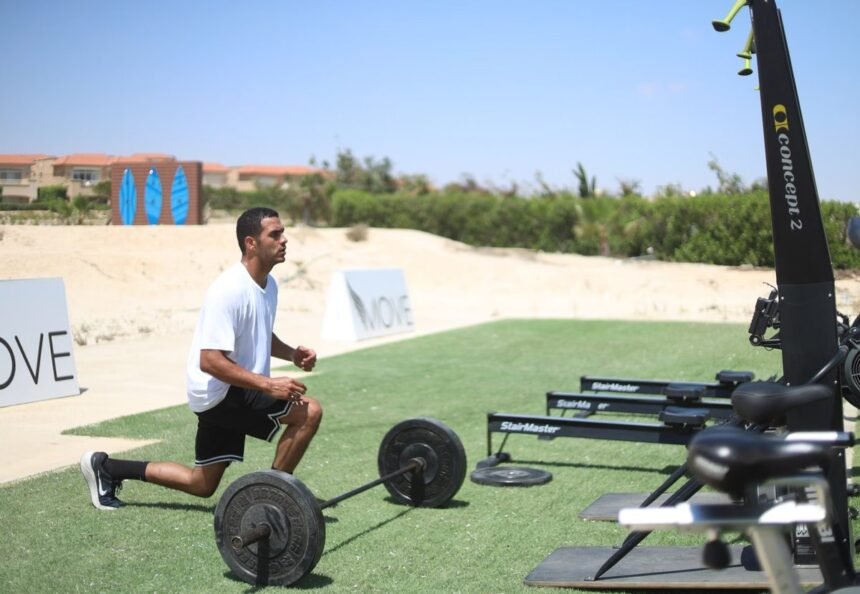
Image credit: karim Elmasry / Pexels

Barbell Row Form and Grip Guide

Good barbell row form starts with a hip hinge you can hold while you pull the bar and lower it again. Choose a grip that lets your wrists stay in line with your forearms, and use a weight you can control through the whole set. Before you add weight, check that the last rep reaches the same point as the first without a change in torso angle.

Contents
Barbell Row Form and Grip GuideHow do you set up for a bent-over row?Barbell row muscles workedWhat changes in an overhand vs underhand barbell row?Where should the bar finish?How should you add weight to your rows?Frequently Asked QuestionsShould you reset the bar on the floor between reps?Can you use lifting straps for rows?Can you use dumbbells when the bar limits your grip?

How do you set up for a bent-over row?

Stand with your feet about hip-width apart, soften your knees, and push your hips back until the bar hangs beneath your shoulders. Brace your torso before you pull. Let your arms straighten at the bottom of each rep while keeping your hips in place and your weight steady across both feet.

Use a light warm-up set to check your balance. With the bar hanging, notice where you feel pressure under each foot, then see whether that pressure shifts as you pull. If you rock onto your toes, pause briefly at the bottom and settle your weight before starting the next rep. If the bar brushes your knees on the descent, check whether your knees are drifting forward.

If your setup feels different from rep to rep, film a set from the side. Compare your torso angle just before the first and last pulls. If your chest rises before the bar moves, lighten the load and practice starting the pull by driving your elbows back while your hips stay in place.

Barbell row muscles worked

Your lats, mid-back muscles, and rear deltoids help pull the bar, while your biceps and other elbow flexors bend your arms. The muscles along your spine, along with your glutes and hamstrings, help hold your torso in the hinged position as you raise and lower the bar.

You can see the different roles of the barbell row muscles worked most clearly during the descent. As the bar moves away from your torso, your arms gradually straighten and your elbows move forward. The angle at your hips stays steady even as the bar returns to the bottom.

What changes in an overhand vs underhand barbell row?

An overhand grip generally lets your elbows travel farther from your sides, while an underhand grip often keeps them closer to your ribs. When the bar hangs below you, your palms face toward you with the overhand grip and away from you with the underhand grip. Both grips train your back and biceps.

Start a little wider than shoulder-width with an overhand grip and around shoulder-width with an underhand grip. Treat those widths as starting points. If your wrists bend sharply near the top, adjust your hand spacing and check whether you can keep your wrists in line with your forearms throughout the pull.

For an overhand vs underhand barbell row comparison, try a few light reps with each grip at the same torso angle. Notice where the bar finishes and how your hands feel at both ends of the pull. Use those observations to choose a grip for your work sets.

Where should the bar finish?

Aim to finish the pull near your lower ribs or upper abdomen. Your arm length, grip width, and torso angle affect where the bar ends up. If reaching your torso makes you shrug or raise your chest, end the pull slightly earlier, at a point where you can briefly control the bar before lowering it.

Watch the last few reps of a set, when the pull can get shorter. If you change your grip or torso angle between sets, note where the bar finishes. That gives you a way to compare sets with a similar range of motion when you review your training log.

How should you add weight to your rows?

Add a small amount of weight once you reach the top of your chosen rep range on every set with a steady torso and a controlled descent. For example, if you train for eight to twelve reps per set, wait until you can complete twelve controlled reps on each set before increasing the load.

After an increase, start near the lower end of your rep range and build back up. Record the weight and the reps you complete in each set so you can see how the new load affects the later sets. If you struggle to control the descent, try a smaller increase if you have the plates for it, or return to the previous load.

Frequently Asked Questions

Should you reset the bar on the floor between reps?

Reset the bar on the floor between reps when you do a Pendlay row. In a standard bent-over row, the bar hangs from straight arms between reps. The floor reset gives you time to brace again, while the hanging version keeps you in the hinge throughout the set.

Can you use lifting straps for rows?

Yes, lifting straps can help if your grip gives out before your back and arms. Try them on a work set and see whether they let you finish the planned reps with the same control. If you also want to train your grip, do your warm-up sets without straps.

Can you use dumbbells when the bar limits your grip?

Yes, dumbbells let you turn your palms toward each other and choose a comfortable hand path on each side. You can row both at once from a hip hinge or row one dumbbell at a time with your free hand on a bench for support while you pull.


Related training guides

  • Push Ups: What to Know About Proper Form
  • Understanding chin ups: Form and muscles worked
  • Understanding Cable Fly Form and Variations
  • Dumbbell Bench Press Form: Your Training Questions

You Might Also Like

Incline Bench Press: Common Questions Answered

Dumbbell Bench Press Form: Your Training Questions

Understanding Bulgarian Split Squat Form and Muscle Focus

Understanding Cable Fly Form and Variations

Deload Week: Common Questions Answered

TAGGED:Barbell RowBarbell Row GuideBarbell Row Technique
Share This Article
Facebook Email Print
Previous Article Push Ups: What to Know About Proper Form - Fitness - fitness and muscle building Push Ups: What to Know About Proper Form
Next Article Understanding Cable Fly Form and Variations - Fitness - fitness and muscle building Understanding Cable Fly Form and Variations

Search Posts

Explore Our Categories

  • ABS WORKOUT
  • AMINOS
  • ARM WORKOUTS
  • BACK WORKOUTS
  • COMPETITIONS AND EVENTS
  • VITAMINS AND SUPPLEMENTS FOR MUSCLES
  • CARDIO WORKOUTS
  • CHEST WORKOUTS
  • CREATINE
  • ENERGY DRINKS
  • FAT BURNERS
  • FULL BODY WORKOUT
  • INSPIRATIONAL STORIES
  • LEG WORKOUTS
  • NUTRITION + RECIPES
  • PROTEIN SUPPLEMENTS
  • SHOULDER WORKOUTS
  • VIDEOS
Self Weight Loss

Share Your Story 💪

Got valuable insights or personal breakthroughs to share? We’re always on the lookout for contributors who are passionate about muscle and fitness to share their knowledge and experiences. Join our community and help inspire others on their journey to peak physical condition.

Submit Your Post

You Might also Like

Push Ups: What to Know About Proper Form - Fitness - fitness and muscle building

Push Ups: What to Know About Proper Form

November 19, 2026
front squat: What to Know About Form and Grip - Fitness - fitness and muscle building

Front Squat Form: What to Know About Technique and Grip

November 17, 2026
Understanding how to track workout progress over time - Fitness - fitness and muscle building

Understanding how to track workout progress over time

October 24, 2026
how to bulk clean: Common Lean Bulking Questions Answered - Fitness - fitness and muscle building

How to Bulk Clean: Common Lean Bulking Questions Answered

November 4, 2026
Previous Next
Muscle Pact

Muscle building done right can turn you into a sculpted powerhouse from top to bottom; done wrong, it can cripple you for months or even years.

At MusclePact, we’ll teach you everything you need to know to create and maintain a body-building regimen that will enable you to meet or outright obliterate your strengthening goals. From determining the most effective ab workout to power-up your core, to figuring out which Creatine and hormone supplements, fat burners and liquid amino can do more harm than good, our elite trainers will give you the best tips and techniques you need to succeed.

If you want to build a body worthy of a magazine spread, but you don’t want to suffer the consequences of health problems that could plague you for years, MusclePact is the place for you. Dig into all we have to offer and let us show you how to bring your body to its maximum potential.

Company

  • About Us
  • Disclaimer
  • Privacy
  • Become a Contributor to MusclePact
  • Contact
  • Editorial Policy
  • Medical Disclaimer

Featured Pages

  • A Guide To Natural Bodybuilding
  • Alpha-GPC Supplementation
  • Digital Millennium Copyright Act
  • Effective Muscle Building Foods
  • How To Gain Muscle Fast
  • Muscle Building Tips for Triceps Growth
  • Top 10 Muscle Building Mistakes Made In The Gym
  • Why I Do Cardio With Weights

Categories

  • ABS WORKOUT
  • AMINOS
  • ARM WORKOUTS
  • BACK WORKOUTS
  • COMPETITIONS AND EVENTS
  • VITAMINS AND SUPPLEMENTS FOR MUSCLES
  • CARDIO WORKOUTS
  • CHEST WORKOUTS
  • CREATINE
  • ENERGY DRINKS
  • FAT BURNERS
  • FULL BODY WORKOUT
  • INSPIRATIONAL STORIES
  • LEG WORKOUTS
  • NUTRITION + RECIPES
  • PROTEIN SUPPLEMENTS
  • SHOULDER WORKOUTS
  • VIDEOS

Copyright © Muscle Pact. All Rights Reserved

Welcome Back!

Sign in to your account

Username or Email Address
Password

Lost your password?