
Incline Bench Press: Common Questions Answered
The incline bench press trains your chest with help from your shoulders and triceps while you lie on an upward-sloping bench. A repeatable setup makes it easier to judge progress and keep each repetition controlled. This guide covers muscle involvement, bench settings, technique, equipment, and progression so you can fit the movement into your chest workout with a clear purpose.
Incline bench press muscles worked: which muscles contribute?
The incline bench press muscles worked include the pectoralis major, particularly its upper, clavicular portion, alongside the front deltoids and triceps. Your chest and shoulders help move your upper arms, while your triceps straighten your elbows. Changing the bench angle changes their relative contribution; it does not completely isolate one chest region.
A strong sensation in one area is not the only way to judge a useful set. Pay attention to whether your repetitions remain consistent and whether you can gradually improve performance. Avoid changing several setup details at once, because that makes comparisons between sessions harder to interpret.
What is the best incline bench angle?
A modest incline, often around 15 to 30 degrees, is a practical starting point for emphasizing the upper chest. Steeper settings generally increase the contribution of the front shoulders. The best incline bench angle also depends on your proportions, available equipment, and ability to press through a comfortable range.
Record the bench setting in your training notes, especially when using adjustable benches with numbered slots instead of degree markings. If you switch equipment, check the actual position before loading up. A different bench or pad shape can make a familiar setting feel different during your warm-up.
What does good incline bench press form look like?
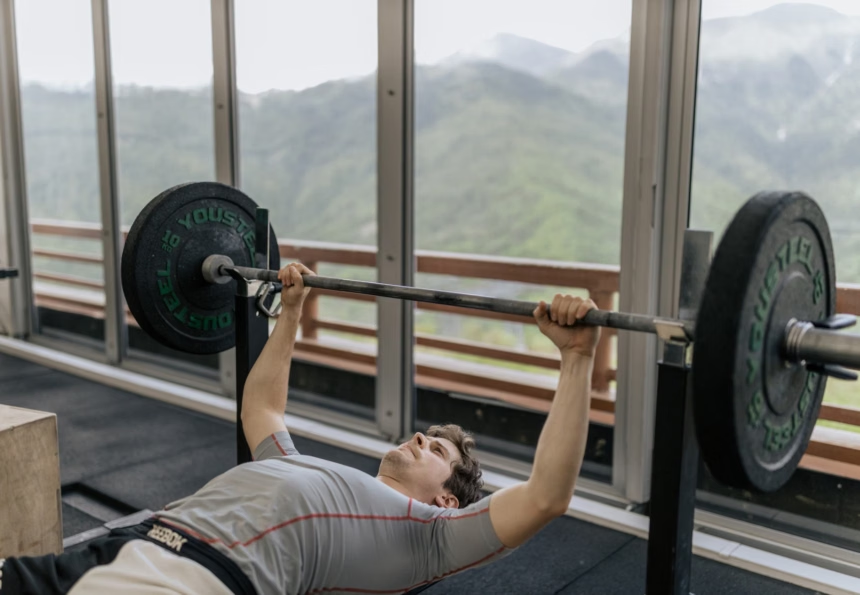
Good incline bench press form starts with planted feet, supported hips, and shoulder blades held comfortably back against the pad. Lower the weight under control toward your upper chest, keeping your wrists stacked over your forearms. Press upward without bouncing, lifting your hips, or letting the load drift toward your face.
A small natural back arch is acceptable, but exaggerating it changes your pressing position. Set the rack hooks so you can unrack without reaching excessively. Before adding working weight, check that the bench is stable and position safety bars or arrange a spotter if a failed repetition could trap you.
Should you use dumbbells or a barbell?
Dumbbells allow each arm to move independently and give you more freedom to adjust your grip. A barbell provides a fixed hand position and often makes small load increases easier. Either can train the chest effectively; choose the version you can control, set up safely, and progress consistently.
Consider how you will begin and finish the set, not just how the press feels. Getting heavy dumbbells into position can become its own challenge. If entry or exit is awkward, lighter weights or a suitable chest-press machine may offer a more manageable option for that session.
How much weight should you lift?
Choose a load that lets you complete your planned repetitions with consistent technique and roughly two repetitions still possible. For a simple starting prescription, try two or three working sets of eight to twelve repetitions. Reduce the weight if your range shortens, your hips rise, or you need assistance.
When every working set reaches the top of your chosen range with control, try the smallest available weight increase. Your repetitions may initially drop toward the lower end. Log the load and repetitions for each set so progression follows what you actually performed, rather than what you remember lifting.
Where should this exercise go in your workout?
Place this exercise early in your session when upper-chest development is a priority, after your warm-up and before fatigue limits performance. If another lift matters more, perform that lift first. Account for other chest, shoulder, and triceps exercises when deciding how many pressing sets to include.
One incline movement and a complementary exercise may be enough for a session. Keep your exercise order stable for several weeks to compare performance under similar conditions. Use lighter practice sets before your working sets, and avoid turning the warm-up into another demanding chest workout before your planned training begins.
Frequently Asked Questions
Should the bar touch your chest on every repetition?
A controlled touch can provide a repeatable endpoint if your shoulder comfort and proportions allow it. Do not force contact by rolling your shoulders forward or bouncing the bar. If reaching your chest causes discomfort, reduce the load and reassess your grip, bench setting, and available range before continuing.
What should you do if your shoulders hurt while pressing?
Stop the set if pressing causes shoulder pain, and avoid repeatedly testing the painful movement with heavy weight. Check whether a lighter load, lower incline, or different grip allows comfortable movement. Persistent, recurring, or worsening pain warrants assessment by a qualified healthcare professional rather than repeated technique experiments.
Do you need a different tempo for upper-chest training?
You do not need a special tempo to train the upper chest. Counting seconds is optional, and a deliberately slow repetition is not a requirement. Choose a pace you can repeat throughout the set, and record any intentional tempo changes so you can interpret differences in your performance between sessions.
Can you replace flat pressing with incline pressing?
You can use incline pressing as your main chest press if it suits your goals, equipment, and comfort. Flat pressing remains useful for training the chest at a different angle, but it is not compulsory in every program. Choose exercises that provide complementary work without exceeding what you can recover from.