
Glute Workout: Common Questions About Training at Home
A glute workout at home can include bridges, squats, split squats and hip hinges, with resistance adjusted to your ability. You do not need a room of equipment, but you do need challenging exercises and a way to track progress. Start with movements you can control, then adjust your training as your performance improves.
What should a glute workout at home include?
Include a hip extension exercise, a squat or split squat, and an optional movement that takes your leg out to the side. Together, these provide different ways to challenge the gluteal muscles. Choose variations you can perform through a comfortable range without losing balance or changing your technique to finish repetitions.
Before your glute workout, clear enough space for floor and standing movements. Place resistance and any stable support within reach. Check that you can complete each exercise without bumping into furniture or needing to rearrange equipment midway.
What are the best glute exercises for home training?
The best glute exercises for home training are movements you can perform consistently, load progressively, and control without pain. Bridges offer a floor-based option, split squats challenge one leg at a time, and Romanian deadlifts introduce a hip hinge. Your available equipment and movement control determine which variations fit your routine.
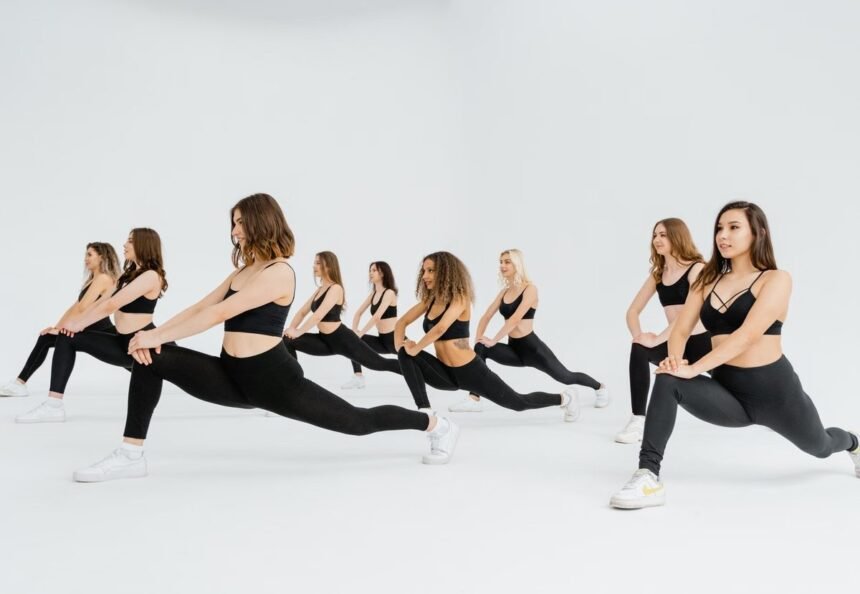
For hinges, move your hips backward while keeping the weight close. Practise without resistance first. During split squats, use stable support if balance distracts you from the movement, and choose a stance that lets you lower with control.
How to build glutes at home?
Building glutes at home requires progressively challenging resistance training, enough food to support training, and recovery between demanding sessions. Begin with manageable exercises and record your sets, repetitions, and resistance. When the same work becomes easier with consistent technique, increase one training variable rather than changing the entire routine at once.
Equipment availability shapes how to build glutes at home over time. If ordinary bridges become easy, add a held weight or try a staggered stance. Slower repetitions can increase difficulty, although eventually you may need more resistance or a harder variation.
How often should you train glutes?
Two sessions per week on nonconsecutive days are a practical starting point for home training. This schedule provides repeated practice while leaving time between demanding sessions. Adjust frequency according to your total leg training, recovery, and performance; adding another session is useful only if you can recover and maintain exercise quality.
When considering “how often should you train glutes,” count squats, lunges and hinges elsewhere in your week. These contribute work even when a session has another name. Avoid treating each routine as an entirely separate workload.
How many sets and repetitions should you start with?
Start with two sets per exercise and choose a repetition target that leaves a few controlled repetitions possible at the end. Eight to fifteen repetitions can be a convenient starting range for loaded movements. Lighter exercises may require more repetitions before they feel challenging, so treat the range as guidance.
Before working sets, rehearse each movement with an easier variation. Use the table as a starting template, adjusting repetitions to your ability. Pause between sets until you feel ready to repeat the movement with control.
| Exercise | Starting amount | Main cue |
|---|---|---|
| Floor bridge | 2 sets of 10-15 | Lift with control |
| Supported split squat | 2 sets of 8-12 per side | Use support for balance |
| Side-lying leg raise | 2 sets of 12-20 per side | Keep your pelvis steady |
How can you tell whether you are progressing?
Progress means completing more work with comparable technique, range of motion, and effort. Examples include using a heavier weight for the same repetitions or performing additional controlled repetitions with the same load. Record these details so that a shorter movement or extra momentum does not look like an improvement on paper.
Appearance changes are harder to assess day to day; compare photos taken under similar conditions. If performance repeatedly declines, review workload and recovery. Record any change in exercise variation so your next comparison remains useful.
Frequently Asked Questions
Can you train your glutes without resistance bands?
You can train your glutes without bands using bridges, split squats, squats, and hip hinges. Bodyweight may provide enough challenge initially, while dumbbells or a securely loaded backpack can add resistance later. Bands are one loading option; they are not required for an effective home training routine.
Do you need to feel a burn during every set?
A burning sensation is not required for a set to challenge your muscles. It can occur during longer sets, but it does not measure future muscle growth. Judge the set by controlled movement, appropriate effort, and whether you can gradually improve performance without sacrificing your technique.
Should you squeeze your glutes at the top of a bridge?
A deliberate glute contraction can help you finish a bridge, but stop when your hips reach a comfortable extended position. Forcing them higher by arching your lower back changes the movement. Keep your ribs controlled and aim for a steady lift rather than the highest possible position.
Can you repeat the same exercises every week?
Repeating the same exercises each week makes practice and progress tracking easier. Keep movements that remain comfortable and challenging, then adjust repetitions or resistance as needed. Replace an exercise when equipment limits progression, the movement causes discomfort, or another variation better suits your current ability and training goals.