
Your oblique workout explained: at-home exercises
An oblique workout at home can start with a bent-knee side plank and a cross-body dead bug. You need enough floor space to lie down and extend your limbs. Your obliques run along the sides of your abdomen and help you turn, bend, and steady your torso. Think of carrying a grocery bag in one hand and keeping your shoulders level as you walk. A suitcase hold gives you a way to practice that last action with a dumbbell.
What are the best oblique exercises for beginners?
The best oblique exercises for beginners include bent-knee side planks and cross-body dead bugs. The side plank challenges you to resist bending sideways while you hold still. The dead bug asks you to keep your ribs and pelvis steady as opposite limbs move. Begin with a version you can control on both sides.
Bent-knee side plank
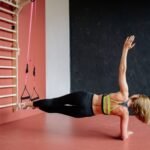
Lie on one side with your knees bent and your forearm on the floor. Place your elbow directly beneath your shoulder and stack your top hip over your bottom hip. Press your forearm and lower knee into the floor, then lift your hips until your shoulder, hip, and knee form a line. Let your top hand rest on your hip so you can feel if your pelvis starts to roll backward. Breathe during the hold. If your hips drop, lower them to the floor and record the time you held your position.
Cross-body dead bug
Lie on your back with your arms pointing toward the ceiling and your knees bent over your hips. Slowly reach one arm overhead as you lower the opposite heel toward the floor. Stop the reach when you feel your lower back start to arch or your ribs lift. Bring your arm and leg back to the starting position together, then switch sides. If your knees drift toward your chest between reps, pause and reset them over your hips. Shorten the reach until you can keep your pelvis steady throughout each rep.
How do you structure an oblique workout at home?
Start with two rounds of bent-knee side planks and cross-body dead bugs. Hold the plank for 15 to 25 seconds per side, then do six slow dead bug reps per side. Rest as needed between exercises and take about a minute between rounds so you can repeat both movements with control.
Use a timer and record how long you held the plank on each side. If one side loses position before 15 seconds, use that shorter time for your next round on both sides. For dead bugs, take a slow count of two to lower the heel. Each reach and return counts as one rep, so six per side means 12 alternating reps per round.
When you can hold the bent-knee plank for 25 seconds comfortably on both sides, try straightening your legs and staggering your feet for support. Start the new variation with a shorter hold as you get used to the position. To progress the dead bug, reach your heel a little farther while keeping the same number of reps. Use the range you can control through the last rep of the round.
How do you do an oblique workout with dumbbells?
Start with a suitcase hold using one dumbbell for 20 seconds per side. Stand with your feet under your hips and hold the dumbbell beside one thigh with your arm hanging naturally. Keep your shoulders level and your torso upright as the weight pulls down through your hand.
Keep your knees soft and breathe throughout the hold. If you have a mirror in front of you, glance at it to see whether the shoulder on the loaded side has risen or your hips have shifted. If you can correct the shift, finish the hold in that position. If it returns, set the dumbbell down and shorten the next hold. Put the weight down between sides so you can reset your stance before switching hands.
Once you can hold steady on both sides, turn the hold into a suitcase carry. Clear a short, straight path before picking up the dumbbell. Walk at a pace that lets you keep your shoulders level as your weight shifts from foot to foot. Use the same path with the dumbbell in your other hand so you can compare how well you control each side over the same distance.
Frequently Asked Questions
How often should you train your obliques?
Two sessions per week on separate days are a practical starting point for direct oblique training. You can put them after your regular strength sessions or do them separately at home. If you already train with one-sided carries or other core exercises, count those sets when deciding how much extra work to add.
What can you do if side planks bother your shoulder?
Try a cross-body dead bug if supporting your weight on one forearm bothers your shoulder. For a less demanding plank variation, rest your forearm against a wall and step your feet a short distance away, then lean gently into the wall. Choose a movement you can do comfortably.
How do you choose a weight for an oblique workout with dumbbells?
Start with a dumbbell you can grip securely through a complete hold on either side. If you are choosing between two weights, use the lighter one for your first session. Move up by the smallest available increment once you can finish every hold while breathing steadily and maintaining your starting posture.