
Plank Variations: Side Plank Benefits and Hold Times
Use plank variations to practice keeping your core steady as you change how your body is supported. A forearm plank gives you a baseline for your brace, a side plank lets you work each side separately, and shoulder taps add movement while you hold your position. If you’re wondering “how long should you hold a plank?” or which version to start with, decide what you want to practice first. That gives you something specific to look for during the set.
What are the best plank variations for building core strength?
The best plank variations for a basic core routine are the forearm plank, the side plank, and the high plank with shoulder taps. Each gives you a different task. Keep your lower back from arching in the forearm plank, keep your hips from dropping sideways in the side plank, or keep your torso from turning during taps.
Forearm plank. Set your elbows directly under your shoulders and extend your legs behind you. Press your forearms and toes into the floor and bring your hips into line with your shoulders and ankles. Take a breath without letting your ribs flare or your lower back arch. Keep your gaze on the floor between your forearms so your head follows the line of your spine.
High plank with shoulder taps. Set your hands under your shoulders and place your feet a little wider than hip width. Lift one hand, touch the opposite shoulder, and return the hand to the floor before switching sides. If your hips turn before your hand reaches your shoulder, widen your stance and slow down. Use the pause between taps to check that your weight has settled before lifting the next hand. If the reach still makes you twist, practice lifting your palm just off the floor and setting it back down. Gradually reach farther while keeping your chest and hips square.
What are the main side plank benefits?
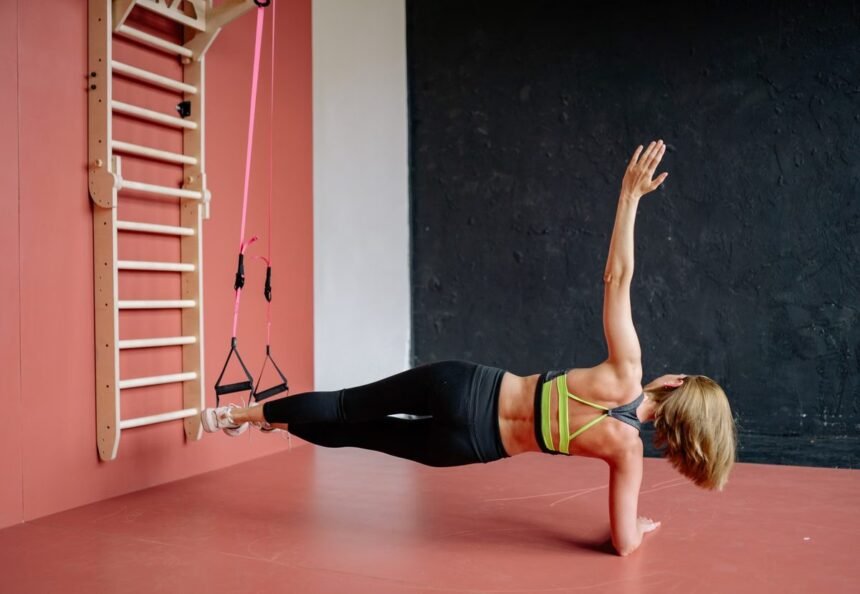
Side plank benefits include training your obliques and the other muscles that help keep your trunk from bending sideways. Your supporting shoulder and the muscles around your hips also help you stay steady. Since you work one side at a time, you can compare how well you control the same position on each side.
For a straight-leg side plank, lie on your side with your elbow under your shoulder and your legs extended. Press through your forearm and lift your hips, keeping your top hip directly over your bottom hip. If you tend to roll, stagger your feet so both rest on the floor. Once you can hold that position steadily, try stacking your feet and see whether your hips stay in place. Rest your free hand on your top hip so you can feel whether it rolls forward or back as you lift.
How long should you hold a plank?
Start with 10 to 20 seconds per hold if you can breathe steadily and maintain your starting position for that long. End the set sooner if your hips sag, your torso twists, or you have to hold your breath. Take a break before repeating the hold so you can reset your position.
Start timing once you are in position, so the time you record reflects the hold itself. When you can finish your planned hold with the same form you started with, add a few seconds at your next workout. If you switch to a harder version, begin with a shorter hold so you have time to get used to the new setup.
How can you fit plank variations into a workout?
Try two rounds of a forearm plank and a side plank on each side at the end of a strength workout. Use the same order in both rounds so you can notice which position gets harder. Rest between holds until you can set up again and breathe comfortably as you brace.
For the next few workouts, record the version you used, how long you held it, and what ended the set. If you want to practice shoulder taps, try them in place of the forearm plank for one round and record how many controlled taps you do on each side. Keep the rest of the routine consistent so you can compare sessions.
Frequently Asked Questions
Can you do a side plank with your knees bent?
Yes, you can use a bent-knee side plank when the straight-leg version is hard to control. Support yourself on your forearm and bottom knee, then lift until your shoulder, hip, and knee line up. The shorter distance between your points of support makes this version easier to hold.
Should you start with your weaker side on side planks?
Start with the side you find harder to hold, then match that hold time on the other side. Use the same foot position and elbow placement on both sides so the comparison is fair. If they feel similar, alternate which side goes first from one workout to the next.
Can you do a plank with your hands on a bench?
Yes, you can place your hands on a sturdy bench to make a high plank easier. Set your hands under your shoulders, walk your feet back, and keep your body in a straight line from shoulders to ankles. As the hold becomes easier, try a lower, stable surface.
What should you do if your wrists tire first during a high plank?
Switch to a forearm plank if wrist fatigue ends your high plank early. Rest your forearms on the floor and let your hands relax. Try a short hold in this position and check whether you can maintain your brace more comfortably with your weight on your forearms.