By using this site, you agree to the Privacy Policy and Terms of Use.
Accept
Muscle Pact
Muscle PactMuscle Pact
Font ResizerAa
Search
  • ABS WORKOUT
  • AMINOS
  • ARM WORKOUTS
  • BACK WORKOUTS
  • COMPETITIONS AND EVENTS
  • VITAMINS AND SUPPLEMENTS FOR MUSCLES
  • CARDIO WORKOUTS
  • CHEST WORKOUTS
  • CREATINE
  • ENERGY DRINKS
  • FAT BURNERS
  • FULL BODY WORKOUT
  • INSPIRATIONAL STORIES
  • LEG WORKOUTS
  • NUTRITION + RECIPES
  • PROTEIN SUPPLEMENTS
  • SHOULDER WORKOUTS
  • VIDEOS
Have an existing account? Sign In
Follow US
© 2024 Muscle Pact. All Rights Reserved.
Muscle Pact > Blog > Fitness > Romanian Deadlift Muscles Worked: A Guide to Form
Fitness

Romanian Deadlift Muscles Worked: A Guide to Form

MP Staff
MP Staff
Published November 16, 2026
Share
8 Min Read
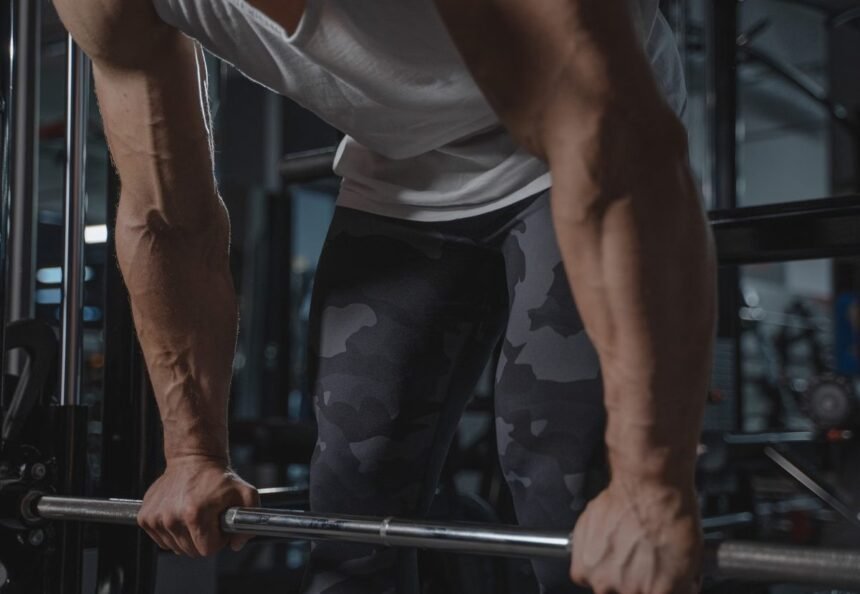
Understanding the romanian deadlift: Form and Muscles Worked - Fitness - fitness and muscle building
Image credit: Tima Miroshnichenko / Pexels

Romanian Deadlift Muscles Worked: A Guide to Form

Good Romanian deadlift form uses a controlled hip hinge to train the hamstrings and glutes while your trunk stays steady. Start standing, move your hips backward, and keep the weight close to your legs. Learning the movement means finding a repeatable range you can control, rather than chasing the floor or lifting the heaviest available weight.

Contents
Romanian Deadlift Muscles Worked: A Guide to FormWhat does good romanian deadlift form look like?Romanian deadlift muscles worked: which muscles move and support you?How low should you lower the weight?Romanian deadlift vs conventional deadlift: what changes?Which technique mistakes should you correct first?How can beginners add it to a workout?Frequently Asked QuestionsCan you use dumbbells instead of a barbell?Should you feel your lower back working?Do lifting straps change which muscles you train?

What does good romanian deadlift form look like?

Good technique combines a backward hip movement, slightly bent knees, and a weight that stays close to your legs. Keep your trunk braced and your back position steady as you lower. Stand by extending your hips, finishing upright without leaning backward or forcing your shoulders behind your hips.

Before starting, leave enough space behind you for your hips to move freely. Settle your feet and grip before lowering the weight. Follow this sequence, giving each repetition the same controlled start and finish:

  1. Stand tall with the weight against the front of your thighs and your feet stable.
  2. Brace your abdomen, soften your knees, and keep your neck aligned with your torso.
  3. Push your hips backward while guiding the weight down close to your legs.
  4. Stop before you need to round your back or bend your knees further.
  5. Extend your hips to stand, then reset your position before beginning the next repetition.

Romanian deadlift muscles worked: which muscles move and support you?

The hamstrings and gluteus maximus perform much of the hip-extension work, while the spinal erectors help hold the torso steady. Your abdominal muscles contribute to trunk stability, and your forearms maintain your grip. The exercise therefore challenges the back of the thighs and hips alongside several supporting muscle groups.

During the descent, the hamstrings lengthen as your hips bend. Keep the movement deliberate so you can notice whether your hips are moving backward or your knees are taking over. A sensation of stretching can help you recognize the hinge, but it should not become a reason to force extra depth.

How low should you lower the weight?

Lower the weight only as far as you can maintain your hip hinge and steady back position. For many lifters, that places the bar somewhere below the knees or around mid-shin. Your stopping point depends on your proportions, mobility, and control; touching the floor is unnecessary for this exercise.

Film a light set from the side to compare your repetitions. Watch where your hips stop moving backward and whether your back position changes as the weight descends. Use that observation to choose a consistent stopping point. Someone else’s depth is not a useful target if reaching it changes your movement.

Romanian deadlift vs conventional deadlift: what changes?

The main differences are the starting position and how much the knees bend. The former begins standing and lowers through a hip hinge, usually without reaching the floor. A conventional deadlift begins from the floor and combines hip extension with more knee extension as the weight rises toward standing.

When comparing romanian deadlift vs conventional deadlift, consider which movement you intend to practice. The standing variation emphasizes controlling the descent and reversing the hinge. The floor variation requires a starting setup at the ground. Give each exercise its own setup instead of carrying the same depth and knee movement between them.

Which technique mistakes should you correct first?

Correct a drifting weight, excessive knee bending, and loss of back position before increasing the load. Address the first mistake you notice instead of trying several cues simultaneously. Use a lighter practice set to check whether that adjustment improves the movement, then reassess before adding weight or repetitions.

If your descent becomes squat-like, practice without weight by reaching your hips toward a wall behind you. If the weight swings forward, slow down and guide it along your legs. Review the next set for the specific change you intended; adding more cues can make it harder to judge what helped.

How can beginners add it to a workout?

Beginners can practice the hinge without weight, then introduce light dumbbells or a light bar for a small number of controlled sets. Place it where you can concentrate on technique rather than rushing through fatigue. Choose a load that lets you repeat the same movement and stop before control deteriorates.

Two sets of eight repetitions can serve as a practice starting point, adjusted to your control. Rest until your grip and concentration are ready for another set. Increase the challenge only when the final repetitions remain as controlled as the first.

Frequently Asked Questions

Can you use dumbbells instead of a barbell?

Yes, dumbbells allow you to perform the same hip-hinge pattern while holding a weight in each hand. Keep them close to the front or sides of your thighs throughout the descent. Choose weights you can control together, without twisting your torso or letting one hand drop below the other.

Should you feel your lower back working?

Your lower-back muscles can work to maintain torso position, but discomfort is not a target or proof of good technique. If your back feels increasingly strained, stop the set and reassess the load, range, and brace. Persistent or recurring pain warrants assessment by a qualified healthcare professional before continuing.

Do lifting straps change which muscles you train?

Lifting straps assist your grip while leaving the basic hip-hinge movement unchanged. They can help when your hands become the limiting factor, although they reduce how much your grip must contribute. Learn to secure and release them properly, and keep the load within what your hips and trunk can control.


Related training guides

  • Upper Lower Split for Beginners: 4-Day Training Guide
  • Understanding Foam Rolling Benefits for Your Workout
  • Understanding Sumo Deadlift: Form and Muscles Worked
  • Front Squat Form: What to Know About Technique and Grip

You Might Also Like

Weight Lifting Belt: When to Wear One and What It Does

Training Volume per Week: Common Questions Answered

Upper Lower Split for Beginners: 4-Day Training Guide

How to Build Bigger Arms: Exercises and Training Tips

Front Squat Form: What to Know About Technique and Grip

TAGGED:Muscles Workedromanian deadliftRomanian Deadlift FormRomanian Deadlift Guide
Share This Article
Facebook Email Print
Previous Article upper lower split: A Beginner’s Guide to 4-Day Training - Fitness - fitness and muscle building Upper Lower Split for Beginners: 4-Day Training Guide
Next Article Understanding Sumo Deadlift: Form and Muscles Worked - Fitness - fitness and muscle building Understanding Sumo Deadlift: Form and Muscles Worked

Search Posts

Explore Our Categories

  • ABS WORKOUT
  • AMINOS
  • ARM WORKOUTS
  • BACK WORKOUTS
  • COMPETITIONS AND EVENTS
  • VITAMINS AND SUPPLEMENTS FOR MUSCLES
  • CARDIO WORKOUTS
  • CHEST WORKOUTS
  • CREATINE
  • ENERGY DRINKS
  • FAT BURNERS
  • FULL BODY WORKOUT
  • INSPIRATIONAL STORIES
  • LEG WORKOUTS
  • NUTRITION + RECIPES
  • PROTEIN SUPPLEMENTS
  • SHOULDER WORKOUTS
  • VIDEOS
Self Weight Loss

Share Your Story 💪

Got valuable insights or personal breakthroughs to share? We’re always on the lookout for contributors who are passionate about muscle and fitness to share their knowledge and experiences. Join our community and help inspire others on their journey to peak physical condition.

Submit Your Post

You Might also Like

Bicep Curl Variations: Your Training Questions Answered - Fitness - fitness and muscle building

Bicep Curl Variations: Your Training Questions Answered

October 31, 2026
Understanding hip thrust form: How to Do It Correctly - Fitness - fitness and muscle building

Understanding hip thrust form: How to Do It Correctly

October 24, 2026
how to bulk clean: Common Lean Bulking Questions Answered - Fitness - fitness and muscle building

How to Bulk Clean: Common Lean Bulking Questions Answered

November 4, 2026
Understanding how to track workout progress over time - Fitness - fitness and muscle building

Understanding how to track workout progress over time

October 24, 2026
Previous Next
Muscle Pact

Muscle building done right can turn you into a sculpted powerhouse from top to bottom; done wrong, it can cripple you for months or even years.

At MusclePact, we’ll teach you everything you need to know to create and maintain a body-building regimen that will enable you to meet or outright obliterate your strengthening goals. From determining the most effective ab workout to power-up your core, to figuring out which Creatine and hormone supplements, fat burners and liquid amino can do more harm than good, our elite trainers will give you the best tips and techniques you need to succeed.

If you want to build a body worthy of a magazine spread, but you don’t want to suffer the consequences of health problems that could plague you for years, MusclePact is the place for you. Dig into all we have to offer and let us show you how to bring your body to its maximum potential.

Company

  • About Us
  • Disclaimer
  • Privacy
  • Become a Contributor to MusclePact
  • Contact
  • Editorial Policy
  • Medical Disclaimer

Featured Pages

  • A Guide To Natural Bodybuilding
  • Alpha-GPC Supplementation
  • Digital Millennium Copyright Act
  • Effective Muscle Building Foods
  • How To Gain Muscle Fast
  • Muscle Building Tips for Triceps Growth
  • Top 10 Muscle Building Mistakes Made In The Gym
  • Why I Do Cardio With Weights

Categories

  • ABS WORKOUT
  • AMINOS
  • ARM WORKOUTS
  • BACK WORKOUTS
  • COMPETITIONS AND EVENTS
  • VITAMINS AND SUPPLEMENTS FOR MUSCLES
  • CARDIO WORKOUTS
  • CHEST WORKOUTS
  • CREATINE
  • ENERGY DRINKS
  • FAT BURNERS
  • FULL BODY WORKOUT
  • INSPIRATIONAL STORIES
  • LEG WORKOUTS
  • NUTRITION + RECIPES
  • PROTEIN SUPPLEMENTS
  • SHOULDER WORKOUTS
  • VIDEOS

Copyright © Muscle Pact. All Rights Reserved

Welcome Back!

Sign in to your account

Username or Email Address
Password

Lost your password?