
Bicep Curl Variations: Your Training Questions Answered
Bicep curl variations change your grip, upper-arm position, or equipment while keeping elbow bending at the center of the exercise. A useful routine combines movements you can perform comfortably and measure consistently. Start with a small selection, learn each setup, and record your performance. The goal is to make your training manageable, with exercise choices that suit your equipment and schedule.
What are the best bicep curl variations for a balanced routine?
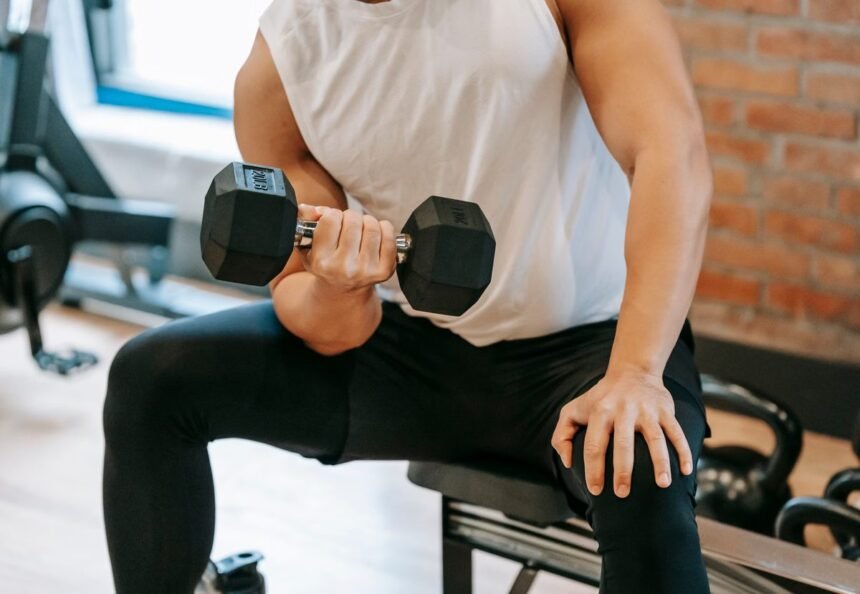
A balanced routine can include a palms-up dumbbell curl, a neutral-grip hammer curl, and a supported preacher curl. These exercises offer different grips and upper-arm positions without requiring a long exercise list. Choose movements that feel comfortable through a controlled range and allow you to track repetitions and resistance consistently.
The best bicep curl variations for your circumstances also depend on practical access. Standing dumbbell curls need little setup, while cables offer another resistance option. If the preacher station is regularly occupied, choose an available movement so equipment queues do not dictate your entire session.
Hammer curl vs bicep curl: what changes?
A hammer curl uses a neutral grip, with palms facing inward, while a conventional bicep curl uses a palms-up grip. Both train the muscles that bend your elbow. Changing the grip changes the contribution of those muscles, so hammer curls provide a useful alternative rather than replacing palms-up curls entirely.
When comparing hammer curl vs bicep curl, assess each exercise separately in your training log. Keep your wrists aligned with your forearms and avoid swinging. A heavier dumbbell on one movement does not, by itself, show that the exercise is more effective.
What are the main preacher curl benefits?
The main preacher curl benefits are upper-arm support and a repeatable setup that can make swinging harder. Resting your arms on a pad reduces your freedom to move them during the lift. This makes the exercise useful for practicing controlled elbow movement, although it does not automatically make every repetition strict.
Adjust the seat before picking up the weight, and note the setting for future sessions. Position yourself so the pad supports your upper arms without forcing an awkward posture. Lower the weight deliberately rather than dropping into the bottom position or bouncing into another repetition.
Do incline curls train differently from standing curls?
Incline curls place your upper arms behind your torso, while standing curls usually keep them beside it. That shoulder position changes the starting position of the biceps. Incline curls can complement an upright curl, provided you can keep your shoulders comfortable and avoid letting your elbows drift forward throughout the lift.
Set the bench at an angle that lets you sit securely with your back supported. Check the position with a light weight before beginning your working sets. If the position feels uncomfortable, use a seated upright curl instead of forcing your arms farther backward.
How many curl exercises should you do per workout?
Two curl exercises are a practical starting point for a workout that includes direct biceps training. Use one palms-up movement and one exercise with a different grip or supported position. The appropriate amount depends on your other pulling exercises, weekly schedule, and whether your performance remains consistent across sessions.
For an example session, perform two sets of dumbbell curls followed by two sets of hammer curls. Treat this as a starting template to adjust. Consider how your arms feel and perform at the next session before adding more sets or another exercise.
How should you progress your curls?
Progress curls by adding controlled repetitions within a chosen range, then increasing resistance when you can complete all planned sets with consistent technique. For example, use a range of eight to twelve repetitions. Once every set reaches twelve without swinging or shortening the movement, try the next manageable weight increment.
Record the exercise, load, repetitions, and relevant setup details after each session. If the next available weight makes your technique deteriorate, return to the previous load. Compare sets performed under similar conditions; a rushed final set is less useful as a benchmark for progress.
When should you change bicep curl variations?
Change your curl selection when an exercise becomes uncomfortable, your equipment changes, or progress stalls despite consistent execution and adequate recovery. You can also rotate an exercise to maintain interest. Keep some movements stable, however, because switching everything each session makes it harder to tell whether your performance is improving.
Before replacing a movement, review your log for missed sessions or inconsistent effort. Change one exercise at a time and write down the reason. Give the replacement a consistent setup so you can assess whether it actually suits your routine better over subsequent workouts.
Frequently Asked Questions
Do preacher curls isolate the lower biceps?
Preacher curls do not isolate a separate “lower biceps” muscle. They train elbow flexion with the upper arm supported in front of the torso. The sensation near your elbow does not prove that only that region is working, and the exercise cannot guarantee a particular biceps shape.
Can you perform curls with resistance bands?
Resistance bands can provide resistance for curls when dumbbells or cables are unavailable. Secure the band according to its instructions, inspect it for damage, and use a stance that keeps it stable. Because tension changes as the band stretches, record your band and setup when comparing workouts.
Should you curl both arms together or alternate?
Both approaches can work: simultaneous curls save time, while alternating curls let you concentrate on one arm at a time. Choose the version that allows steady posture and controlled repetitions. Count repetitions for each arm, and avoid twisting your torso to help the working side lift the weight.