
When to Use Lifting Straps: A Practical Guide
Knowing when to use lifting straps starts with identifying why a pulling set ends. These accessories connect your hands to a bar or handle and can help when your grip gives out while your back or legs could continue working. Their usefulness depends on the exercise, the equipment, and the purpose of the set.
Before adding assistance, check your load, hand position, and setup. Support should address a holding limitation while allowing you to perform and finish the movement under control.
When is grip assistance useful?
Use grip assistance when your hands lose their hold before the muscles you intend to train reach the planned effort. It can suit pulling sets where grip is an unwanted limitation. Keep sets unassisted when challenging your hold is part of the exercise’s purpose or your training goal.
During a Romanian deadlift, for example, your fingers might begin opening even though you could perform more controlled repetitions through your hips. That is a different problem from being unable to move the weight with consistent technique. Identify which limitation you are experiencing before changing your equipment.
If the bar rolls because you rushed your hand placement, reset your grip first. Check that your hands and the implement are dry, and reconsider a load that you cannot control.
How do you compare lifting straps vs chalk?
Chalk helps manage moisture and improves friction, while a wrap provides a physical connection around the implement. Choose chalk when slipping mainly comes from a surface problem. Consider additional support when your fingers cannot maintain the hold despite adequate friction and the intended muscles can continue working.
The practical lifting straps vs chalk decision starts with the cause of slipping. Follow your gym’s chalk policy and check the equipment surface before applying anything. Neither option fixes an unstable setup, damaged equipment, or a repetition you cannot control.
Record the assistance you use in your training log. Changing grip support changes the conditions of a set, so an assisted personal best needs that context when you compare sessions. Keep comparisons consistent enough to understand what has improved.
Which pulling exercises are suitable?
Rows, pulldowns, shrugs, and deadlift variations can be suitable when the equipment permits a secure wrap and straightforward release. The handle shape and movement determine whether assistance fits the exercise. Avoid any arrangement that crowds your hands, obstructs the equipment, or makes disengaging difficult when you finish.
On a chest-supported row, check the available space around the handle before loading it. A wrap should leave room for your hands without interfering with the movement. A suitable bar attachment does not mean every machine handle will work equally well.
Consider the exercise’s purpose, too. If a carry or hold is intended to challenge your hands, adding assistance changes that task. Pressing exercises require their own secure hand position; a pulling accessory does not replace that requirement.
How should you put them on?
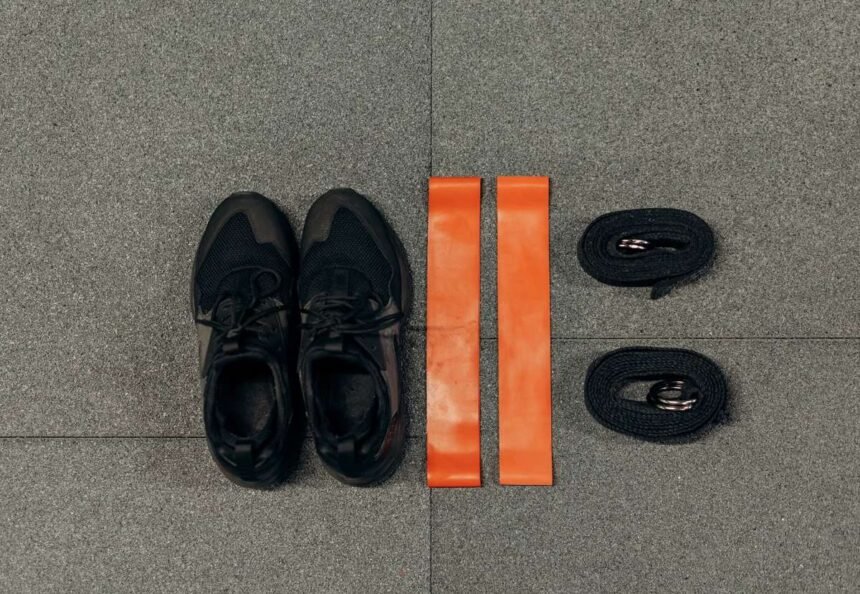
For a typical lasso design, thread the loose end through the loop, place it around your wrist, and wrap the tail around the implement according to the manufacturer’s directions. Close your hand over the wrap and remove slack. Practice with an unloaded bar before progressing to working weight.
Different designs fasten differently, so follow the instructions for your particular product. Check both sides before starting, especially if your second hand is harder to position. Do not assume that copying someone else’s wrapping method suits your equipment.
With a light load, rehearse setting the weight down and opening your hands. Reset a wrap that shifts, interferes with your hand position, or makes release awkward. Being attached more tightly is not automatically a better setup.
Plan your assisted sets
Decide before the session which sets will challenge your grip and which will prioritize the intended pulling muscles. You might retain appropriate unassisted work, then add support where your hands would otherwise end a planned set early. Let the session’s purpose guide that choice.
Keep your intended repetitions and movement quality in view throughout each set. If you can hold the implement but cannot complete another controlled repetition, finish the set or reconsider the load. A secure connection alone does not establish that continuing is appropriate.
Frequently Asked Questions
Do lifting straps reduce grip strength?
Using them does not automatically make your grip weaker, although assisted sets reduce the holding demand. To assess the question “do lifting straps reduce grip strength” in your routine, review your remaining unassisted work. Retain suitable holds, carries, or pulling sets when stronger hands are a training goal.
Should beginners use grip assistance?
Beginners can use grip assistance when they understand the exercise and can practice attaching and releasing it with light weight. Learning a stable hand position and controlled movement comes first. If the bar slips immediately, review the load and setup before assuming an accessory is the solution.
Can you use them in a deadlift competition?
Competition use depends on the sport, federation, and event rules. Powerlifting deadlift rules generally prohibit this assistance, while some strongman events permit it. Check the rules for your specific competition before planning equipment or attempts, and practice the exact grip and setup that the event allows.
When should you replace a worn pair?
Replace a pair when tearing, damaged stitching, failing closures, or other deterioration could compromise the connection. Inspect the areas that contact the implement and support the wrist. Follow the manufacturer’s care and replacement guidance, and stop using equipment whose condition you cannot confidently assess before your next set.