By using this site, you agree to the Privacy Policy and Terms of Use.
Accept
Muscle Pact
Muscle PactMuscle Pact
Font ResizerAa
Search
  • ABS WORKOUT
  • AMINOS
  • ARM WORKOUTS
  • BACK WORKOUTS
  • COMPETITIONS AND EVENTS
  • VITAMINS AND SUPPLEMENTS FOR MUSCLES
  • CARDIO WORKOUTS
  • CHEST WORKOUTS
  • CREATINE
  • ENERGY DRINKS
  • FAT BURNERS
  • FULL BODY WORKOUT
  • INSPIRATIONAL STORIES
  • LEG WORKOUTS
  • NUTRITION + RECIPES
  • PROTEIN SUPPLEMENTS
  • SHOULDER WORKOUTS
  • VIDEOS
Have an existing account? Sign In
Follow US
© 2024 Muscle Pact. All Rights Reserved.
Muscle Pact > Blog > Fitness > Understanding Cable Fly Form and Variations
Fitness

Understanding Cable Fly Form and Variations

MP Staff
MP Staff
Published November 21, 2026
Share
8 Min Read
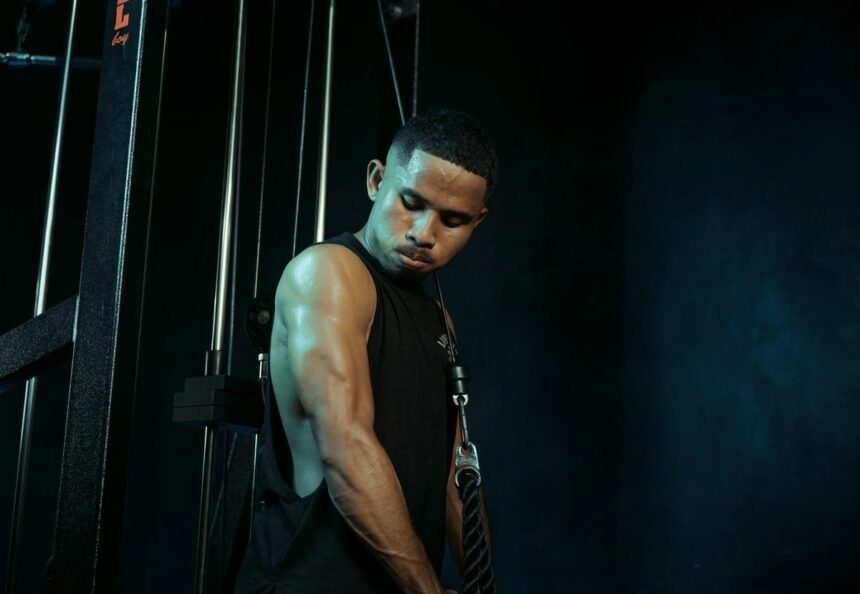
Understanding Cable Fly Form and Variations - Fitness - fitness and muscle building
Image credit: Asso Myron / Pexels

Understanding Cable Fly Form and Variations

Good cable fly form starts with a stable stance, a slight bend in your elbows, and a smooth arc as you bring your upper arms toward each other. Start with the pulleys near shoulder height to practice the motion. Moving the pulleys higher or lower changes the direction of the arc.

Contents
Understanding Cable Fly Form and VariationsHow Do You Set Up for Standing Flyes?How Do You Do a High to Low Cable Fly?How Do You Do a Low to High Cable Fly?Adding Flyes to a Chest WorkoutFrequently Asked QuestionsShould your hands cross at the end of a rep?Can you do flyes with one cable?Can you compare the weight across different cable machines?

The movement works your chest as your upper arms come toward the middle of your body. If your hands travel farther mainly because your elbows straighten, you’re turning the fly into a press. Think of wrapping your arms around a barrel to keep the path curved.

How Do You Set Up for Standing Flyes?

Set both pulleys near shoulder height, attach a single handle to each cable, and step forward into a staggered stance. Begin with your arms open and your elbows slightly bent. Sweep the handles toward each other in front of your chest, then let your arms open slowly to a comfortable stretch.

Keep your front knee soft and your back foot planted. Stand far enough forward that the cables stay under tension when your arms are open. If the weight stacks settle before you reach that point, take a small step forward and try again. Stop opening your arms before your shoulders roll forward or the stretch becomes uncomfortable.

Use a light practice set to check the setup. If one handle reaches the middle ahead of the other, check that the pulleys are at the same height and that you’re centered between them. Make sure your feet can stay in the same place while both arms move.

How Do You Do a High to Low Cable Fly?

For a high to low cable fly, set both pulleys above shoulder height and sweep the handles down and inward toward your lower chest or upper abdomen. Keep a slight bend in your elbows and hold your torso at a steady angle as you guide the handles back up along the same path.

The downward path can shift the emphasis toward the lower portion of your chest. Use your lower chest as a guide for where to finish. The precise endpoint will vary with pulley height and how far you stand from the machine. You should be able to reverse the movement smoothly from that point.

Watch for your torso dipping as your hands come down. If the dip grows as the set goes on, lighten the load so you can keep your body angle steady and move the handles with your arms.

How Do You Do a Low to High Cable Fly?

For a low to high cable fly, set both pulleys below hip height and sweep the handles up and inward from low at your sides to around upper chest height. Keep your ribs over your pelvis as you lower the handles under control along the same diagonal path.

The upward path can shift the emphasis toward the upper portion of your chest. If your shoulders rise or you lean back near the top, end the sweep a little lower. Check that your upper arms still come together smoothly at that height and that you can lower the handles without shifting your stance.

Standing too far ahead of the low pulleys can pull your hands behind you at the bottom. Move a little closer if you have to reset your shoulders before each rep. Test the adjustment by pausing briefly at the bottom and starting the next rep from that position.

Adding Flyes to a Chest Workout

If a chest press is your main lift, do your flyes after it. Start with two sets of 10 to 15 reps and choose a weight you can control in both directions. Rest long enough to start the next set with steady feet and control over the handles.

Pick one pulley height and record the setting, weight, and reps so you can repeat the setup next time. Aim for the last rep to follow the same path as the first. If the handles start pulling your arms open faster than you can guide them, end the set and use that rep count to judge the load.

Once you reach the top of the rep range on both sets with a controlled return, try the next weight increment. Expect to start lower in the rep range after the increase. If you can’t reach the lower end with the same motion, go back to the previous weight.

Frequently Asked Questions

Should your hands cross at the end of a rep?

Your hands can meet in front of your chest without crossing. A small crossover is optional if you can keep your torso square and continue moving your upper arms inward. Finish where the handles meet if crossing makes you twist, shrug, or reach forward with one shoulder.

Can you do flyes with one cable?

You can do flyes one arm at a time on a single pulley. Stand with the working side toward the machine, take a stable stance, and sweep the handle inward at the chosen angle. Keep your chest facing forward so your torso stays steady as the cable pulls from the side.

Can you compare the weight across different cable machines?

Use the weight on each cable machine as a reference for that machine. Pulley systems can make the same weight-stack number feel different at the handle. When you switch machines, begin with a light set and increase the load until you can match your usual rep range with a controlled arc.

Related training guides

  • Barbell Row Form and Grip Guide
  • Push Ups: What to Know About Proper Form
  • Understanding chin ups: Form and muscles worked
  • Dumbbell Bench Press Form: Your Training Questions

You Might Also Like

Dumbbell Bench Press Form: Your Training Questions

Lat Pulldown Technique: How to Get Your Form Right

Training Volume per Week: Common Questions Answered

Romanian Deadlift Muscles Worked: A Guide to Form

Understanding Foam Rolling Benefits for Your Workout

TAGGED:Cable FlyCable Fly GuideUnderstanding Cable Fly
Share This Article
Facebook Email Print
Previous Article Barbell Row Form and Grip Guide - Barbell Row Technique: Common Questions Answered - Fitness - fitness and muscle building Barbell Row Form and Grip Guide

Search Posts

Explore Our Categories

  • ABS WORKOUT
  • AMINOS
  • ARM WORKOUTS
  • BACK WORKOUTS
  • COMPETITIONS AND EVENTS
  • VITAMINS AND SUPPLEMENTS FOR MUSCLES
  • CARDIO WORKOUTS
  • CHEST WORKOUTS
  • CREATINE
  • ENERGY DRINKS
  • FAT BURNERS
  • FULL BODY WORKOUT
  • INSPIRATIONAL STORIES
  • LEG WORKOUTS
  • NUTRITION + RECIPES
  • PROTEIN SUPPLEMENTS
  • SHOULDER WORKOUTS
  • VIDEOS
Self Weight Loss

Share Your Story 💪

Got valuable insights or personal breakthroughs to share? We’re always on the lookout for contributors who are passionate about muscle and fitness to share their knowledge and experiences. Join our community and help inspire others on their journey to peak physical condition.

Submit Your Post

You Might also Like

glute workout: Common Questions About Training at Home - Fitness - fitness and muscle building

Glute Workout: Common Questions About Training at Home

October 25, 2026
Understanding bulgarian split squat form and muscle focus - Fitness - fitness and muscle building

Understanding Bulgarian Split Squat Form and Muscle Focus

November 18, 2026
Understanding chin ups: Form and muscles worked - Fitness - fitness and muscle building

Understanding chin ups: Form and muscles worked

November 19, 2026
Barbell Row Form and Grip Guide - Barbell Row Technique: Common Questions Answered - Fitness - fitness and muscle building

Barbell Row Form and Grip Guide

November 21, 2026
Previous Next
Muscle Pact

Muscle building done right can turn you into a sculpted powerhouse from top to bottom; done wrong, it can cripple you for months or even years.

At MusclePact, we’ll teach you everything you need to know to create and maintain a body-building regimen that will enable you to meet or outright obliterate your strengthening goals. From determining the most effective ab workout to power-up your core, to figuring out which Creatine and hormone supplements, fat burners and liquid amino can do more harm than good, our elite trainers will give you the best tips and techniques you need to succeed.

If you want to build a body worthy of a magazine spread, but you don’t want to suffer the consequences of health problems that could plague you for years, MusclePact is the place for you. Dig into all we have to offer and let us show you how to bring your body to its maximum potential.

Company

  • About Us
  • Disclaimer
  • Privacy
  • Become a Contributor to MusclePact
  • Contact
  • Editorial Policy
  • Medical Disclaimer

Featured Pages

  • A Guide To Natural Bodybuilding
  • Alpha-GPC Supplementation
  • Digital Millennium Copyright Act
  • Effective Muscle Building Foods
  • How To Gain Muscle Fast
  • Muscle Building Tips for Triceps Growth
  • Top 10 Muscle Building Mistakes Made In The Gym
  • Why I Do Cardio With Weights

Categories

  • ABS WORKOUT
  • AMINOS
  • ARM WORKOUTS
  • BACK WORKOUTS
  • COMPETITIONS AND EVENTS
  • VITAMINS AND SUPPLEMENTS FOR MUSCLES
  • CARDIO WORKOUTS
  • CHEST WORKOUTS
  • CREATINE
  • ENERGY DRINKS
  • FAT BURNERS
  • FULL BODY WORKOUT
  • INSPIRATIONAL STORIES
  • LEG WORKOUTS
  • NUTRITION + RECIPES
  • PROTEIN SUPPLEMENTS
  • SHOULDER WORKOUTS
  • VIDEOS

Copyright © Muscle Pact. All Rights Reserved

Welcome Back!

Sign in to your account

Username or Email Address
Password

Lost your password?