
Chin Ups Muscles Worked and How to Train the Movement
Learning how to do chin ups is easier when you have a clear standard for each rep. Use the same starting position, finish at the same height, and lower at a pace you can control. That gives you a way to judge your progress when you try a different grip, adjust the assistance, or move from bodyweight reps to added load.
How to Do Chin Ups With Good Form?
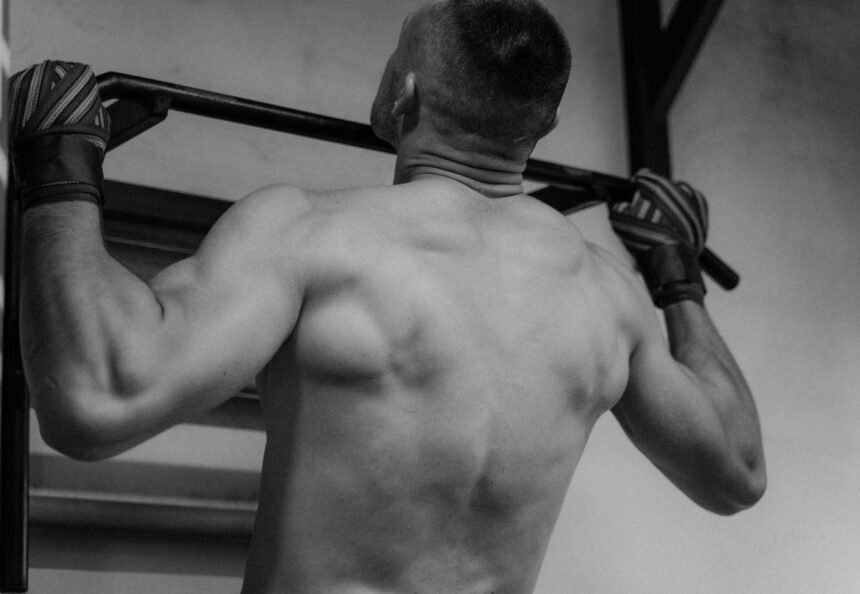
Take a shoulder-width underhand grip, hang with your arms straight, and pull until your chin clears the bar. Drive your elbows down toward your sides and keep your head neutral as you rise. Lower under control until your arms are straight again, with your legs still before the next pull.
Use a stable step if you cannot reach the bar comfortably from the floor. Set your grip before taking your feet off the step. Let your body settle before the first pull so you can start from a still hang. If you begin swinging between reps, pause at the bottom until your legs settle again.
Film a set from the side and compare your first and last reps. Look for a kick from your legs, a reach with your chin, or a sudden drop near the bottom. If these changes show up as you tire, end the set at the last rep you can complete through the full range at a controlled pace.
Chin Ups Muscles Worked and What Each One Does
Your lats draw your upper arms toward your sides, and your biceps and brachialis bend your elbows. Your forearms help you hold the bar, while muscles around your shoulder blades help guide their movement. Your abdominal muscles help steady your torso as you rise and lower.
Pay attention to which part of the movement ends your set. If your fingers start to open while you can still bend your elbows smoothly, your grip is limiting the set. Rest until you can wrap your hands firmly around the bar again before starting the next one.
If improving your reps is the priority, put them early in your back workout. Rows and curls can tire some of the muscles you use to pull. Keeping the exercise in the same place in your routine makes it easier to compare rep quality and count from session to session.
Chin Ups vs Pull Ups: What Changes With the Grip?
The main difference is hand position. A chin-up uses an underhand grip with your palms facing you, while a standard pull-up uses an overhand grip with your palms facing away. Both work the lats and elbow flexors, and the underhand grip puts the biceps in a favorable position to bend the elbows.
When comparing chin ups vs pull ups in your own training, try each grip early in a separate session so you start fresh for both. Use similar hand spacing and count reps through the same range. Some lifters find the underhand grip easier. Along with your rep count, note whether you can keep the descent steady with each grip as the set goes on.
How Can You Build Up to Your First Rep?
Use an assisted pull-up machine or a stable box to practice the full movement with some of your body weight supported. Choose enough assistance to clear the bar smoothly and lower under control. Reduce that assistance once you can repeat the same range and pace across your working sets.
On a machine, record the assistance setting and the number of full reps in each set. When you try a lower setting, check whether you can still reach the same height and lower at the same pace. If you start cutting reps short, return to the previous setting so you can keep practicing the full movement.
With a box, keep its position consistent between sessions and press through your feet where the rep stalls. Pay attention to how much you rely on that push. During later sessions, see whether you can get through the same part of the pull with lighter pressure while keeping the rest of the rep steady.
Test an unassisted rep early in a session after warming up with assisted reps. If you stall, note whether it happens when you leave the hang, move through the middle, or approach the bar. Use that observation in your next assisted set to check whether you can move smoothly through that part of the rep.
Frequently Asked Questions
Does a Wider Grip Change Which Muscles You Work?
A wider underhand grip still works your lats and elbow flexors. Moving your hands outward changes the position of your elbows and shoulders during the pull. If you want to try it, move each hand out a little and bring your hands back in if the wider grip shortens your range or feels awkward.
Can You Use a Neutral Grip Instead of an Underhand Grip?
Yes, you can use parallel handles to train the same main pulling muscles with a neutral grip. Your palms face each other, which puts your wrists and forearms in a different position. Try that grip if turning your palms toward you on a straight bar feels awkward.
When Should You Start Adding Weight?
Add weight once you can repeat full bodyweight reps across your working sets with a steady torso and a controlled descent. Start with a small load and expect to do fewer reps. If the added weight makes you cut the range short, reduce the load for the next set.